
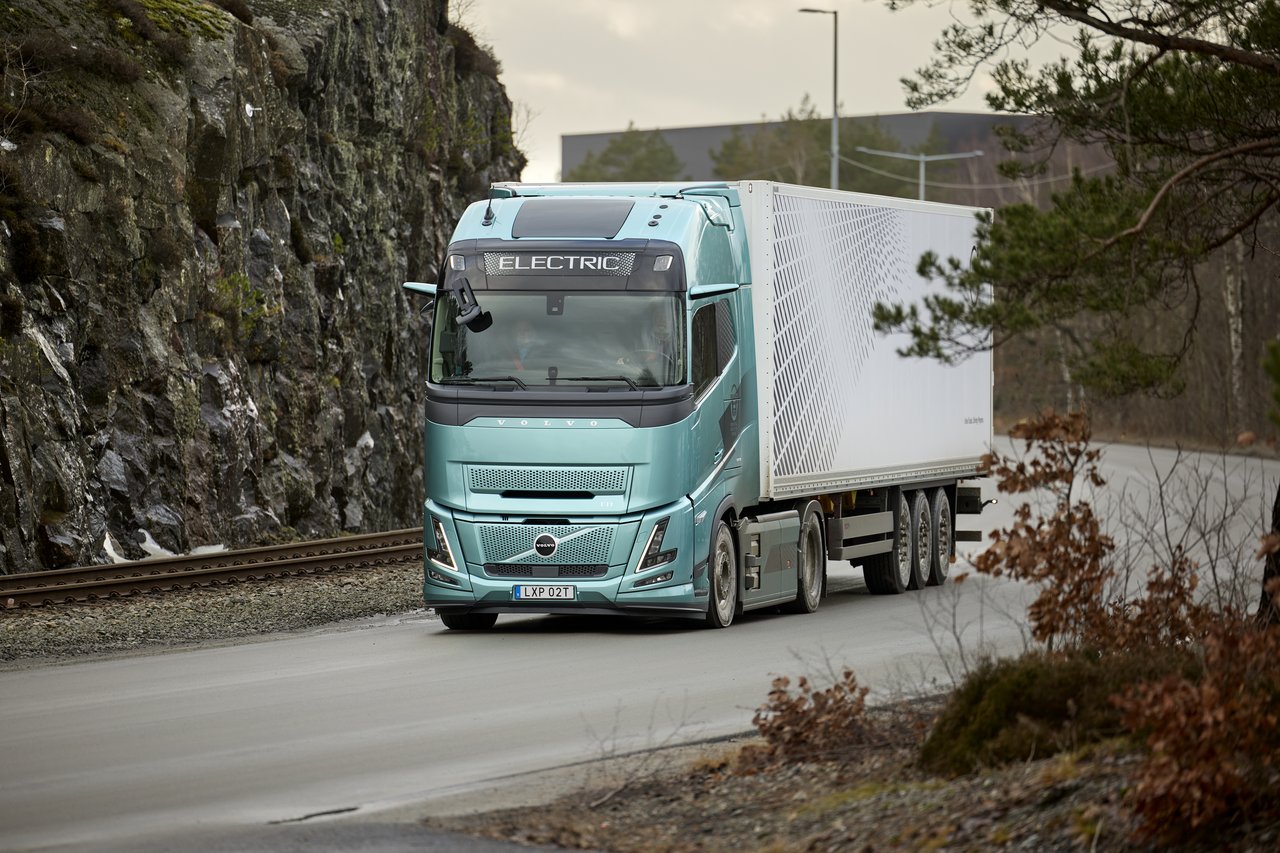
Photo via Wikimedia Commons under CC BY-SA 4.0 license.
Heavy Metal, Zero Decibels: Inside the Volvo FH Aero Electric 700-Km Long-Haul Truck
For decades, the heavy-duty freight corridor has been defined by the deep, rhythmic thrum of high-displacement diesel engines. Long-distance trucking was the final frontier for internal combustion, deemed too heavy, too energy-dense, and too operationally punishing for battery propulsion. Yet, sitting in the damp morning air outside Volvo’s historic Tuve production plant in Gothenburg, the reality hits you not through your ears, but through the absence of sound. Series production of the Volvo FH Aero Electric is rolling out, and with it comes a massive technical leap: a 585-to-780 kWh modular battery architecture that finally cracks the code for intercity electric heavy hauling.
This is not a token urban distribution chassis fitted with an oversized cab. This is a 48-tonne Gross Combination Weight (GCW) tractor unit engineered to haul full payloads up to 700 kilometers on a single charge. By mating aerodynamically optimized bodywork with cutting-edge electrochemical packaging and the dawn of Megawatt Charging System (MCS) infrastructure, Volvo Trucks has fundamentally rewritten the rulebook for long-haul logistics.
Powertrain and Energy Architecture: Pushing the Envelope of Heavy-Duty Electrons
At the mechanical heart of the FH Aero Electric lies a dual- or triple-motor configuration, though the flagship long-haul specification relies on a robust dual-motor setup paired with a specialized constant-mesh automated transmission. The twin electric motors deliver a continuous output of 420 or 460 kW (roughly 563 to 616 horsepower), channeled through a multi-speed gearbox designed to keep the electric machines operating within their peak efficiency sweet spot across varied gradient loads.
Unlike passenger cars where motors spin up to 15,000 RPM, heavy commercial vehicles require immense torque multiplication at low crawl speeds combined with sustained high-speed efficiency on the motorway. Volvo's transmission packaging allows the motors to decouple or shift ratios, mitigating efficiency losses at sustained highway speeds of 90 km/h.
The real engineering triumph, however, is the energy storage. The battery pack scales from 585 kWh up to a massive 780 kWh gross capacity, yielding approximately 725 kWh of usable energy. Managing this much chemical potential across heavy-duty thermal cycles requires complex liquid cooling circuits and reinforced structural housing. The battery modules themselves act as structural load-bearing elements within the chassis frame, minimizing dead weight while maintaining torsional rigidity under maximum payloads.
When it’s time to plug back in, the FH Aero Electric leaps ahead of current commercial standards by supporting the Megawatt Charging System (MCS). Capable of pulling up to 700 kW of DC current, this next-generation hookup drinks electricity from 20% to 80% state-of-charge in roughly 50 minutes. For fleet operators, this matches the mandatory driver rest break, effectively eliminating lost transit hours at the charger.
Chassis Dynamics and Aerodynamic Kinematics
Weighing in as a heavy tractor unit, the FH Aero Electric utilizes a specialized 6x2 configuration featuring a lightweight tag axle to distribute the immense axle loads imposed by the battery mass. Commercial EV engineering is a constant war against tare weight; every kilogram of battery added is a kilogram of freight lost. Volvo’s engineers countered this by optimizing the frame rail geometry and utilizing high-strength steel alloys in the cab structure and chassis mounting points.
Suspension kinematics are tuned to handle the low-slung, centralized mass distribution of the heavy battery packs underneath and between the frame rails. The front independent suspension combines with electronically controlled air suspension on the drive and tag axles. This setup maintains precise geometric alignment and roll stiffness whether the trailer is completely empty or loaded to the legal limit of 48 tonnes GCW.
Aerodynamics play an equally critical role in extending range at highway velocities. The "Aero" designation brings a longer cab front—extended by 24 centimeters compared to the standard FH—sculpted to cheat the wind before it hits the massive frontal area of a box trailer. Traditional side mirrors have been replaced by a digital Camera Monitor System (CMS). These slender winglets reduce aerodynamic drag by several percentage points, translating directly into double-digit energy savings during a thousand-kilometer weekly cycle.
Volvo FH Aero Electric 780 kWh Technical Specifications
| Specification Category | Volvo FH Aero Electric (Long-Haul Spec) |
|---|---|
| Battery Capacity | 585 – 780 kWh gross (approx. 725 kWh usable) |
| Drivetrain | Dual electric motors with multi-speed automated transmission |
| Power Output | 420 kW or 460 kW (563 – 616 hp) |
| Chassis Configuration | 6x2 tractor with lightweight tag axle |
| Gross Combination Weight (GCW) | Up to 48 tonnes |
| Maximum Range | Up to 700 km per charge (depending on topography and payload) |
| Fast Charging Capability | Up to 700 kW DC via Megawatt Charging System (MCS) |
| Charging Time (20% to 80%) | Approximately 50 minutes |
| Production Hub | Tuve Plant, Gothenburg, Sweden (Series production started Sept 2026) |
On the Road: Silent Torque on the Asphalt
Climbing up into the driver’s cockpit reveals an interior optimized for long-haul ergonomics, completely free of engine tunnel intrusions. Twist the rotary selector, release the electronic parking brake, and step on the accelerator. The delivery of over 2,000 Nm of instant torque is buttery smooth, devoid of the violent gear-shift interruptions that characterize automated manual diesel boxes hauling 48 tonnes up a 6% incline.
On the test track and open highway, the noise floor inside the cabin drops dramatically. Without diesel clatter and exhaust roar, the primary ambient sound is tire hum and aerodynamic whisper around the A-pillars. The regenerative braking system is seamlessly integrated into the primary foot-brake pedal and steering-column stalk. Drivers can modulate deceleration precisely, feeding significant kinetic energy back into the massive 780 kWh battery packs while descending long grades, saving foundation brake pads from thermal overload.
Market Positioning and Global Availability
With series production officially underway at the Tuve manufacturing facility in Gothenburg as of September 2026, Volvo Trucks is actively rolling out customer deliveries across Europe, with North American and select global markets slated for subsequent deployment phases. The FH Aero Electric sits at the absolute pinnacle of commercial EV engineering, commanding a premium over traditional internal combustion and early-generation electric trucks.
Its primary rivals include heavy-duty battery-electric propositions from Daimler Truck (Mercedes-Benz eActros 600) and Scania. However, Volvo’s integration of the extended range pack and the rollout-ready Megawatt Charging System gives the FH Aero Electric a distinct operational advantage for fleet managers demanding true intercity trunking capabilities without middle-of-the-route layovers.
Frequently Asked Questions (FAQ)
How does the 48-tonne GCW limit affect real-world battery degradation and payload capacity?
Volvo utilizes advanced thermal management systems to keep operating temperatures optimal, mitigating rapid degradation. While the massive battery packs add tare weight compared to a diesel tractor, optimized chassis packaging and lightweight components keep payload penalties manageable, allowing fleets to operate economically within standard legal weight limits.
Is Megawatt Charging (MCS) widely available for long-haul routes right now?
Infrastructure is expanding rapidly in step with vehicle deliveries. While early adopters will rely on corridor-specific MCS hubs along major European freight arteries (such as Milence network developments), the truck is fully backwards-compatible with high-power CCS Type 2 chargers for depot and opportunistic top-ups.
How does the aerodynamic cab extension improve efficiency compared to the standard FH Electric?
The 24-centimeter front elongation, combined with smoothed body panels, sealed gaps, and digital camera mirrors, significantly cuts down the aerodynamic wake. At sustained highway speeds, this drag reduction yields a noticeable decrease in kilowatt-hour consumption per kilometer, directly unlocking the milestone 700-km range.
The Verdict
The Volvo FH Aero Electric represents a monumental milestone in commercial vehicle engineering. By refusing to compromise on battery capacity, aerodynamic efficiency, or charging speed, Volvo has delivered a 48-tonne heavy hauler that treats long-distance zero-emission transit not as an experimental compromise, but as a superior operational reality. It proves that the future of heavy freight is electric, quiet, and profoundly capable.
Sources and editorial note
Specifications, performance numbers, pricing, and technical measurements in this feature are based on official manufacturer documentation, engineering releases, and certified automotive benchmarks. Real-world parameters may vary based on market specifications and testing conditions.
- https://www.volvotrucks.com/en-en/trucks/electric/volvo-fh-aero-electric.html
- https://www.volvotrucks.com/en-en/news-stories/press-releases/2026/sep/volvo-starts-series-production-of-electric-trucks-with-up-to-700.html
The featured lead image is sourced from Wikimedia Commons under Creative Commons licensing with proper attribution. Editorial reporting complies with international copyright and fair-use standards.