
Few road cars in recent memory carry a pedigree as pure as the Toyota GR Yaris. Born directly out of Toyota's campaign in the FIA World Rally Championship, this compact three-door hatchback is not a track-day toy that cosplays as a racer — it is a homologation special in the truest sense, built so that Toyota GAZOO Racing could enter it in WRC competition. What you get on the road is a distilled, street-legal version of what Sébastien Ogier and Kalle Rovanperä drove to multiple world championship titles. That is not marketing spin. That is the actual origin story of this car.
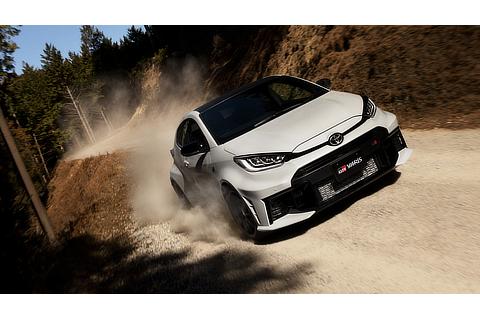
Source: Toyota Motor Corporation Global Newsroom – global.toyota | © Toyota Motor Corporation. All rights reserved.
WRC Heritage: Built for the Rally Stage, Sold to You
When Toyota rejoined the World Rally Championship in 2017 with the Yaris WRC, the rules demanded that a minimum number of road-going cars share fundamental architecture with the competition vehicle. Toyota's answer was the GR Yaris — not an adaptation, not a badge-engineered hot hatch, but a ground-up performance machine engineered in parallel with the rally car.
The result paid dividends on every gravel and tarmac stage on the WRC calendar. The TOYOTA GAZOO Racing World Rally Team swept the manufacturers', drivers', and co-drivers' titles in 2021, 2022, and 2023 — three consecutive clean sweeps. Ogier and Rovanperä traded victories in cars whose fundamental DNA lives in the production GR Yaris sitting in showrooms today. By 2026, Ogier's ninth WRC title was commemorated with a special-edition GR Yaris limited to 100 units in Japan and another 100 in Europe.
The Engine: G16E-GTS — World's Most Powerful Production Three-Cylinder
At the heart of the GR Yaris sits the G16E-GTS — a 1,618 cc inline three-cylinder turbocharged unit that, at launch, held the distinction of being the most powerful production three-cylinder engine on earth. The numbers tell part of the story.
Full Engine Specifications
- Engine code: G16E-GTS
- Configuration: Inline 3-cylinder, DOHC 12-valve with Dual VVT-i
- Displacement: 1,618 cc
- Bore × Stroke: 87.5 × 89.7 mm
- Compression ratio: 10.5:1
- Fuel system: D-4ST (combined direct and port injection)
- Turbocharging: Single-scroll turbo with ball-bearing cartridge
- Max power (Europe/UK): 280 DIN hp (206 kW) at 6,500 rpm
- Max power (Japan RZ "High Performance"): 304 PS (224 kW) at 6,500 rpm
- Max torque (Europe): 390 Nm at 3,250–4,600 rpm
- Max torque (Japan HP): 400 Nm at 3,250–4,600 rpm
- Fuel tank: 50 litres
The revised 2024 generation raised power from the original 261 DIN hp and 360 Nm, representing meaningful gains driven by lessons learned on the rally stages. The Japanese-market RZ "High Performance" trim goes further still, squeezing 304 PS and 400 Nm from the same 1.6-litre block.
Drivetrain and Transmission: GR-FOUR All-Wheel Drive
The GR-FOUR AWD system is arguably the engineering showpiece of the entire package. Unlike conventional all-wheel-drive systems that distribute torque reactively, GR-FOUR uses an electronically controlled multi-plate clutch centre differential with three driver-selectable modes:
- Normal: 60:40 front/rear split for everyday driving
- Gravel: 53:47 for loose surfaces
- Track: Fully variable between 30:70 and 50:50 depending on conditions
Front and rear Torsen® mechanical limited-slip differentials are fitted — no e-LSD approximation, no software compensation. Torsen gears generate torque-biasing through helical gear geometry alone, delivering faster and more linear response than clutch-type LSDs under hard cornering loads. This is the same fundamental approach used in purpose-built competition cars.
Transmission Options
- 6-speed iMT (intelligent Manual Transmission): Standard across most markets. Features rev-matching on downshifts. Ratios: 3.538 / 2.238 / 1.535 / 1.162 / 1.081 / 0.902 (reverse: 3.831). Final drive: 3.941 (1st–4th), 3.350 (5th–6th and reverse).
- 8-speed GAZOO Racing Direct Automatic Transmission (GR-DAT): Introduced in 2024. Developed with input from WRC drivers, featuring competition-speed shifts and paddle shifters. Adds approximately 20 kg to kerb weight.
Ultralight Body: Where Weight Saving Becomes Architecture
The GR Yaris does not share its body with the standard Yaris. Toyota built an entirely bespoke three-door structure. The roof panel is carbon-fibre reinforced polymer (CFRP), the bonnet and doors are aluminium alloy, and the front fenders are resin. The result is a kerb weight of just 1,280 kg for the 6-speed manual — extraordinary for a permanent AWD performance car in 2024–2026.
The wider front track (1,535 mm) and rear track (1,565 mm) versus the standard Yaris demanded unique front suspension geometry, machined subframes, and a completely redesigned rear double-wishbone arrangement that the standard car never uses. The front MacPherson struts feature reinforced lower arms. The combination of wider stance and stiffer structure delivers body stiffness figures Toyota describes as motorsport-grade.
Dimensions and Weight
- Length: 3,995 mm
- Width: 1,805 mm
- Height: 1,455 mm
- Wheelbase: 2,560 mm
- Front track: 1,535 mm
- Rear track: 1,565 mm
- Ground clearance: 124 mm
- Kerb weight (6MT): 1,280 kg
- Kerb weight (8-speed auto): 1,300 kg
- Gross vehicle weight: 1,645 kg
- Boot capacity: 174 litres (VDA, seats in place)
- Coefficient of drag (Cd): 0.346–0.352
- 0–100 km/h: 5.2 seconds (6MT and GR-DAT)
- Top speed: 230 km/h (electronically limited)
Brakes, Wheels, and Tyres
- Front brakes: 356 × 28 mm two-piece ventilated and grooved discs with 4-piston aluminium monoblock callipers
- Rear brakes: 297 × 18 mm ventilated discs with 2-piston aluminium monoblock callipers
- Wheels: 18-inch BBS 8J forged aluminium (Europe/UK); Enkei alloy on Australian GT
- Tyres: 225/40ZR18 Michelin Pilot Sport 4S (Europe/UK); Dunlop SP Sport Maxx 050 on Australian GT
Global Trim Variants
Japan
Japan offers the widest range, with three core grades and optional factory-installed Aero Performance Package:
- RC: Entry-level. 6-speed iMT only. From ¥3,560,000 (6MT) / ¥3,910,000 (GR-DAT).
- RZ: Mid-grade. 6MT from ¥4,480,000 / GR-DAT from ¥4,830,000. Adds BBS wheels, Torsen LSDs, enhanced cooling.
- RZ "High Performance": Flagship — 304 PS / 400 Nm, forged pistons, Bridgestone Potenza Race on BBS. From ¥4,980,000 (6MT) / ¥5,330,000 (GR-DAT).
- Special editions: Sébastien Ogier 9x World Champion Edition (100 units Japan, 100 Europe, 2026); Rovanperä Edition; Morizo RR.
Europe and UK
Single "Circuit" specification standard across the range, including powertrain cooling pack (sub-radiator, intercooler spray, revised intake). UK from ~£46,000 on-the-road. Europe from ~€47,000–€52,000 depending on market taxes.
Australia
- GT: From AU$55,490 (manual) / AU$57,990 (auto). Enkei wheels, Dunlop tyres, CFRP roof, aluminium bonnet and doors.
- GTS: From AU$60,490 (manual) / AU$67,990 (auto). Adds GR suspension, forged BBS wheels, front and rear Torsen LSDs. GTS Aero Performance Package from AU$67,990.
Circuit Pack and Aero Performance Package
In Europe the Circuit specification is standard on all cars, delivering the sub-radiator, intercooler water spray, and revised air intake. These components improve cooling reliability at sustained full-throttle speeds — essential for track use and hot climates. The intercooler spray reduces intake temperatures under load, protecting against power fade on extended runs.
The Aero Performance Package (2025–2026) adds six motorsport-derived aerodynamic components: front splitter, canards, side sill extensions, rear diffuser, and adjustable rear wing — developed through Super Taikyu Series and Japanese Rally Championship competition. Available as a factory option on RZ "High Performance" and RC grades in Japan, and as a separate variant in Australia and Europe.
Price Guide by Market (2024–2026)
- Japan: ¥3,560,000 – ¥5,330,000 (~USD 22,500–33,500)
- United Kingdom: From ~£46,000 on-the-road
- Europe: From ~€47,000 (varies by country)
- Australia: AU$55,490 – AU$70,490
- United States: Not officially sold (GR Corolla is the US market alternative)
Verdict
The Toyota GR Yaris is not a hot hatch that aspires to rally-car levels of ability. It is, in a very literal sense, the road-going version of a championship-winning rally platform. The G16E-GTS engine produces more power per litre than most dedicated track machines. The GR-FOUR AWD system with dual Torsen LSDs offers mechanical sophistication unavailable in almost any other car at this price point. The ultralight body — CFRP roof, aluminium panels, bespoke three-door structure — reflects decisions made for performance, not cost reduction. Five seconds to 100 km/h is impressive in isolation. What the numbers cannot capture is the analogue clarity of a car built to be driven hard on the same roads where WRC champions work.
Sources and editorial note
Specifications, performance data, pricing, and technical claims in this article are based on official manufacturer publications and reputable industry sources linked below. Figures quoted by the manufacturer as test values or internal measurements may differ in real-world use. Pricing varies by market and changes over time.
- https://newsroom.toyota.eu/download/1014f073-5b59-4560-951e-077644ac214f/gryaris2025inclaeroperf_specssheet.pdf
- https://global.toyota/en/newsroom/toyota/42579162.html
- https://newsroom.toyota.eu/download/d0835aa4-aede-41b2-8495-89d688c8248b/gryaris2024-dpl-specssheet.pdf
- https://media.toyota.co.uk/wp-content/uploads/sites/5/pdf/260130-GR-Yaris-Tech-Specs.pdf
- https://newsroom.toyota.eu/the-new-toyota-gr-yaris-a-master-of-ice-and-snow/
- https://global.toyota/en/newsroom/toyota/44085107.html
- https://global.toyota/en/newsroom/toyota/43911513.html
- https://www.toyota.com.au/gr-yaris/range
- https://www.toyota-europe.com/brands-and-services/toyota-gazoo-racing/wrc
- https://toyotagazooracing.com/gr/yaris/
The lead image is an official manufacturer photograph/illustration credited to Toyota Motor Corporation, used under fair editorial reporting with visible attribution. It is reproduced here for identification and commentary purposes only.