
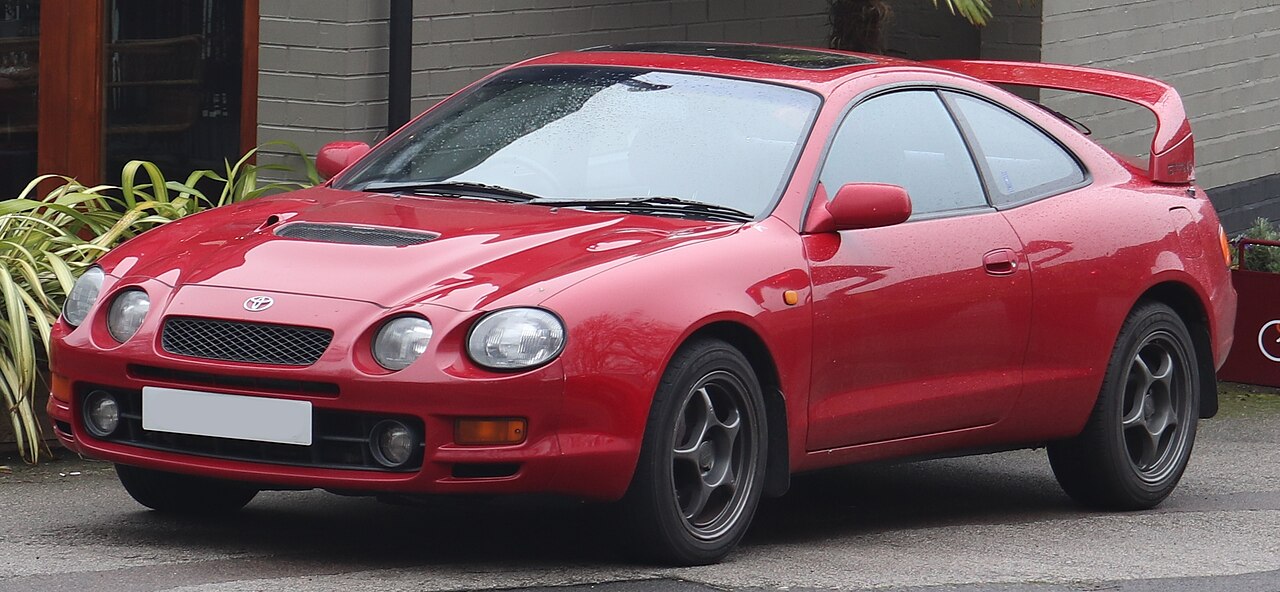
Photo via Wikimedia Commons under CC BY-SA 4.0 license.
For almost two decades, automotive enthusiasts assumed the Celica was permanently sealed in Toyota's history books. When the final seventh-generation liftback rolled off the Higashi-Fuji assembly line in April 2006, the automotive landscape was already turning heavily toward compact crossovers and utilitarian family cars. The affordable, lightweight sports coupe seemed like a relic of an analog era that would never return.
That assumption changed in late 2024. During public appearances at Rally Japan, Toyota Executive Vice President Yuki Nakajima gave fans the definitive statement they had spent eighteen years waiting to hear: "We're making the Celica!" Backed by Chairman Akio Toyoda's outspoken passion for resurrecting Toyota's historical sports car trinity—Celica, MR2, and Supra—the legendary coupe is actively under development within TOYOTA GAZOO Racing.
1. The Official Confirmation: How the Revival Was Greenlit
Rumors of a Celica revival circulated on enthusiast forums for years, but the project gained official traction through a series of intentional signals from senior leadership:
- Executive Vice President Yuki Nakajima (Rally Japan, Nov 2024): Nakajima stated plainly on stage that the company is developing a new Celica, acknowledging that while public disclosure was ahead of formal schedule, internal engineering teams were passionately committed to the vehicle.
- Chairman Akio Toyoda ("Morizo"): The spiritual architect behind Toyota's motorsport renaissance has repeatedly championed bringing back the "Three Brothers" sports car lineup that anchored Toyota showrooms during the 1980s and 1990s.
- In-House Anime Teaser ("Grip"): In Toyota's internal animated series, storyboard whiteboards prominently outlined a future performance roadmap: Supra Mk6, Celica Mk8, MR2 Mk4, and GR GT3.
Industry reports from engineering insiders suggest running mules are already testing experimental powertrains, with an official concept unveiling anticipated ahead of a planned production release targeted for 2027.
2. Seven Generations of Heritage (1970–2006)
The Celica was originally conceived in December 1970 as Japan's answer to the American muscle car wave led by the Ford Mustang and Chevrolet Camaro. Instead of packaging heavy, thirsty V8 blocks, Toyota focused on nimble chassis balance, modern styling, and responsive four-cylinder engines.
| Generation | Years | Key Engines | Power Output | Drivetrain | Significance |
|---|---|---|---|---|---|
| First (A20/A30) | 1970–1977 | 1.6L 2T-G / 2.0L 18R-G | 100–140 hp | RWD | Pioneered the accessible Japanese sports specialty coupe. |
| Second (A40/A50) | 1977–1981 | 2.2L 20R / 2.4L 22R | 90–105 hp | RWD | Spawned the Celica Supra variant with an inline-six engine. |
| Third (A60) | 1981–1985 | 2.4L 22R-E / 1.8L 3T-GTE | 105–160 hp | RWD | Final rear-wheel-drive Celica; debuted Toyota's first turbo twin-cam. |
| Fourth (T160) | 1985–1989 | 2.0L 3S-FE / 2.0L 3S-GTE | 115–190 hp | FWD / AWD (GT-Four) | Switched to FWD; birthed the legendary GT-Four rally platform. |
| Fifth (T180) | 1989–1993 | 2.2L 5S-FE / 2.0L 3S-GTE | 130–225 hp | FWD / AWD (All-Trac) | Curvaceous aero styling; won Toyota's first WRC Drivers' Championship. |
| Sixth (T200) | 1993–1999 | 1.8L 7A-FE / 2.0L 3S-GTE | 110–252 hp | FWD / AWD (ST205) | Quad round headlights; Group A homologation special ST205. |
| Seventh (T230) | 1999–2006 | 1.8L 1ZZ-FE / 1.8L 2ZZ-GE | 140–180 hp | FWD | Radical cab-forward wedge styling; high-revving 8,200 rpm VVTL-i. |
3. World Rally Championship Glory: The GT-Four Reign
While standard road-going Celicas earned a reputation for bulletproof daily reliability, the model's true motorsport status was forged in the mud, snow, and gravel of international rallying. The Celica GT-Four (marketed as the All-Trac Turbo in North America) became the first Japanese production vehicle to systematically dethrone European manufacturers in the World Rally Championship.
- ST165 (1988–1989): Proved the competitive viability of Japanese AWD turbo technology, securing Toyota's first WRC overall victory at Rally Australia in 1989.
- ST185 (1992–1994): Carried Spanish legend Carlos Sainz to the 1992 WRC Drivers' Championship, followed by back-to-back WRC Manufacturers' World Championships in 1993 and 1994.
- ST205 (1994–1999): The apex of Group A homologation engineering. Equipped with an aluminium hood, CT20B twin-entry turbocharger, water-injection intercooling, and factory-plumbed anti-lag provisions.
Across its competitive campaign, the Celica GT-Four collected 38 individual WRC rally victories—establishing the engineering foundation that directly informs today's GR Yaris and GR Corolla GR-FOUR all-wheel-drive systems.
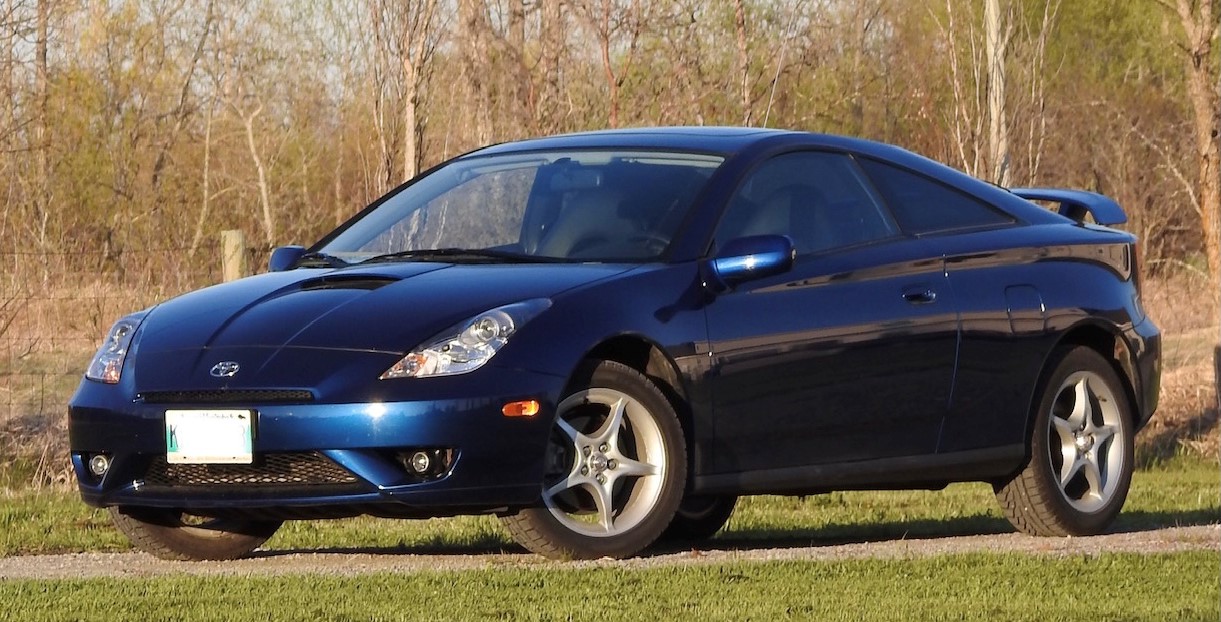
Photo via Wikimedia Commons under CC BY-SA 3.0 license.
4. The 2ZZ-GE Engine: Yamaha Engineering at 8,200 RPM
When the seventh-generation Celica debuted in late 1999, critics initially questioned Toyota's decision to drop the all-wheel-drive GT-Four variant and transition exclusively to front-wheel drive. However, Toyota and Yamaha silenced skepticism with the introduction of the 2ZZ-GE engine in the Celica GT-S.
The 2ZZ-GE featured Toyota's sophisticated VVTL-i (Variable Valve Timing and Lift with intelligence) system. Under normal driving below 6,000 rpm, the engine operated with conservative valve lift for optimal fuel economy and low-end torque. At approximately 6,200 rpm, hydraulic oil pressure engaged a secondary high-lift cam lobe. The transition—known among tuners simply as "Lift"—radically changed the engine's acoustic pitch and propelled the powerband cleanly up to an 8,200 rpm redline.
Producing 180 horsepower from just 1.8 liters of naturally aspirated displacement (100 hp per liter), the 2ZZ-GE was so capable that Lotus selected it to power the iconic Elise Series 2 and Exige sports cars.
5. Why Production Ended in 2006
Despite critical acclaim, several fundamental market shifts led Toyota to end Celica production in April 2006:
- The SUV / Crossover Surge: Buyers who traditionally purchased sports coupes migrated en masse toward compact SUVs like the RAV4. U.S. Celica sales cratered from 52,406 units in 2000 to just 3,113 units in 2005.
- Internal Competition: The launch of Toyota's youth-oriented Scion brand introduced the Scion tC, which offered similar practical coupe packaging at a significantly lower price point.
- Emissions Regulations: Tighter global emission standards required substantial engineering investments that could no longer be amortized over low-volume sports car sales.
6. What to Expect from the Next-Gen Reborn Celica
Based on statements from Toyota product planners and Japanese automotive publications, the upcoming eighth-generation Celica will not simply be an electric commuter car wearing a nostalgic badge:
- Dedicated Performance Architecture: Likely derived from Toyota's new modular sports car platform or evolved TNGA architecture with low center-of-gravity engineering.
- High-Output Turbocharged Powertrain: Rather than full BEV, early reports point to a 2.0-liter turbocharged four-cylinder engine developed under Toyota's collaborative next-gen ICE program with Subaru and Mazda. Target outputs are rumored between 300 hp and 400 hp in top-tier trims.
- GR-FOUR AWD Availability: To pay proper homage to the rally-winning GT-Four, a multi-mode all-wheel-drive configuration is strongly favored over front-wheel drive.
- Expected Arrival: Prototype concept debuts are expected at major international auto shows ahead of commercial showroom availability around 2027–2028.
7. Collector Market Outlook: Values on the Rise
As nostalgia for late-1990s and early-2000s analog performance cars reaches new highs, clean Toyota Celicas are appreciating rapidly:
- Seventh-Gen Celica GT (1ZZ-FE): $6,500 – $12,000 depending on mileage and condition.
- Seventh-Gen Celica GT-S (6-speed manual, unmodified): $14,000 – $24,000 for verified clean-title examples.
- Celica GT-Four ST185 / ST205 (JDM Import): $28,000 – $55,000+, with homologation specials commanding substantial collector premiums.
Frequently Asked Questions
Is the new Toyota Celica confirmed for production?
Yes. Toyota Executive Vice President Yuki Nakajima publicly announced at Rally Japan in November 2024 that Toyota is officially developing the new Celica, supported by Chairman Akio Toyoda's ongoing initiative to revive the brand's classic sports car nameplates.
Will the new Celica be all-electric?
While electrification will likely assist the platform for global emissions compliance, current intelligence suggests the core performance model will feature a newly developed high-efficiency turbocharged combustion engine rather than a pure battery-electric drivetrain.
What was the most successful Celica in racing history?
The Celica GT-Four ST185 is widely regarded as the most successful, securing the 1992 WRC Drivers' World Championship for Carlos Sainz and back-to-back WRC Manufacturers' World Championships for Toyota in 1993 and 1994.
Sources & Reference Material
- Toyota Motor Corporation Global Newsroom — Official corporate announcements and Gazoo Racing development briefs.
- Toyota Celica Historical Archive — Production specifications, racing records, and chassis identification codes.
- TOYOTA GAZOO Racing World Rally Team — Historical archives for WRC Group A competition and GT-Four rally victories.
- Rally Japan (November 2024) — Official press briefing remarks by Executive Vice President Yuki Nakajima.