
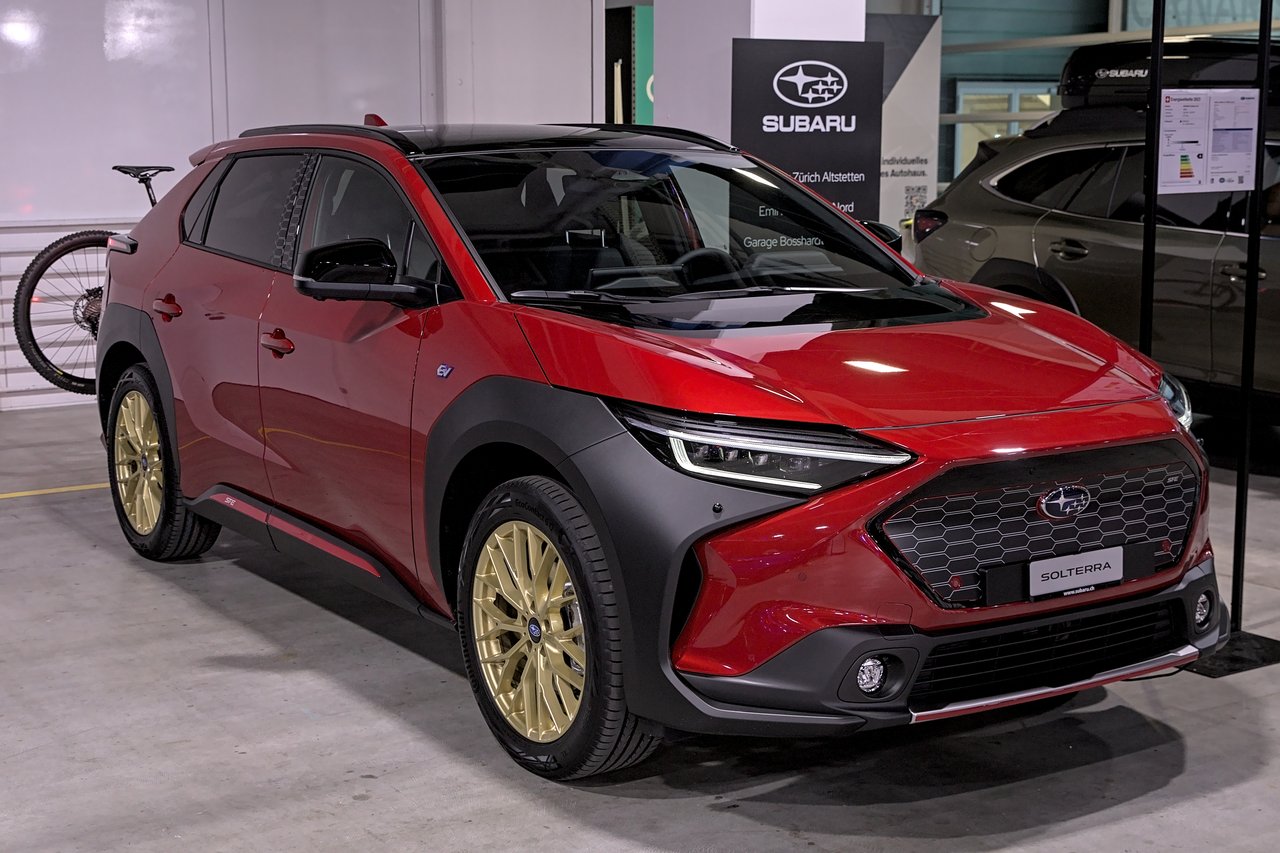
Photo via Wikimedia Commons under CC BY-SA 4.0 license.
Toyota's bZ Gets the Update It Deserved: How a Bigger Battery and Smarter Engineering Make the 2026 Refresh a Genuine Step Forward
When Toyota launched the bZ globally in 2023, it arrived as a calculated statement rather than a bold proclamation. A compact crossover wearing the company's new battery-electric badge, it was engineered to be competent, efficient, and ready for the mainstream—but not necessarily thrilling. Two years on, with EVs settling into their market rhythms and customer priorities crystallizing around range and charging speed, Toyota has done what it does best: listened, refined, and delivered a meaningful update that addresses the real-world concerns of EV buyers without reinventing the wheel.
The 2026 bZ refresh lands with two significant technical gifts. The headline is straightforward but substantial: a new 74.7 kWh battery pack joins the carryover 57.7 kWh unit, and that larger cell pushes the EPA-estimated range on the front-wheel-drive XLE Plus to a claimed 314 miles—a 25 percent leap over the previous generation's 252-mile ceiling. For a vehicle that's designed to live in the real world, not just spec sheets, that margin matters. It's the difference between a weekend getaway requiring charge-stop choreography and one where you arrive with meaningful battery remaining. The dual-motor all-wheel-drive variant, meanwhile, musters 338 horsepower—modest by supercar metrics, but sufficient for a vehicle that tips the scales at around 4,700 pounds and prioritizes efficiency over acceleration theater.
But the update's value extends well beyond kilowatt-hours. Toyota has retrofitted the bZ with a North American Charging Standard (NACS) port—a quiet admission that the industry's charging infrastructure is consolidating around Tesla's standard—and bundled plug-and-charge capability that streamlines the authentication dance at public networks. More meaningfully, the thermal management architecture has been overhauled, enabling faster DC charging performance during conditions where the previous generation would throttle. That's not glamorous engineering, but it's exactly the sort of invisible optimization that transforms an EV from a spreadsheet exercise into a genuine daily-driver proposition.
Powertrain Architecture: e-TNGA's Maturation
The bZ rides on Toyota's e-TNGA platform—the same modular architecture underpinning the C-HR+ that's coming to Western markets and the BZ4X's underpinnings. It's a collaborative platform; Subaru shares development responsibility and contributes its own all-wheel-drive tuning sensibilities. For 2026, the engineering focus has been surgical rather than revolutionary.
Both battery packs—the standard 57.7 kWh and the new 74.7 kWh unit—are lithium-ion chemistries housed in a flat, skateboard-style pack integrated into the vehicle's floor. The larger pack doesn't simply add cells; it reorganizes them with improved electrode chemistry and packaging density to achieve the capacity increase without substantially altering the vehicle's center of gravity or overall dimensions. That restraint is characteristic of Toyota's approach: evolutionary progress over disruptive leaps.
The front-wheel-drive model employs a single permanent-magnet motor rated at 184 horsepower and 300 pound-feet of torque. It's mated directly to a single-speed reducer—EVs have no traditional multi-gear transmission, a reality that still confuses some buyers accustomed to engine convention. The all-wheel-drive configuration adds a second motor at the rear axle, bringing total output to 338 hp and 442 lb-ft. The distribution between front and rear motors is electronically managed by a sophisticated traction-control algorithm that can apportion torque in real time, enabling genuine all-wheel-drive capability rather than mere traction enhancement.
On-board charging capability tops out at 11 kW with Level 2 (240V household), and DC fast charging via the new NACS port can deliver up to 150 kW under optimal conditions—a meaningful upgrade over the previous generation's 100 kW ceiling. That revised thermal strategy isn't just software tuning; Toyota has enhanced the battery's liquid cooling loop, reducing thermal resistance and allowing the pack to accept charge more aggressively without temperature creep forcing the vehicle into protective throttling. Real-world impact: an 80 percent charge on a suitable 150 kW fast charger now takes roughly 28 minutes for the larger battery, down from the previous generation's 35-minute figure.
Chassis Dynamics and Suspension Geometry
The bZ's suspension represents a competent, if unexciting, execution of crossover fundamentals. The front end employs a MacPherson strut layout with coil springs and a stabilizer bar; the rear uses a torsion-beam design with coil springs. It's not the double-wishbone sophistication of premium platforms, but it's proven architecture that balances compliance with body control.
What makes the chassis interesting is how e-TNGA's low center of gravity—courtesy of that floor-mounted battery pack—interacts with the suspension tuning. The bZ sits roughly three inches lower than a traditional crossover's longitudinal engine placement would allow, and that mass concentration around the vehicle's geometric center transforms the driving experience. Body roll is predictable and controlled; understeer, when provoked, is benign and progressive rather than sudden. On a winding mountain pass, the bZ corners with a quiet competence that belies its practical intent. It's not chasing apexes like a sport compact, but it resists the lazy, disconnected feel that plagues many family crossovers.
The electrically powered steering, tuned for the AWD variant to assist active safety systems, carries genuine feedback through the rim. Toyota resisted the temptation to over-assist; there's tactile information being transmitted, not just directional intent. Brake tuning blends regenerative deceleration with hydraulic friction elements in a blend calibrated to feel natural rather than grabby—one of the persistent challenges in EV dynamics. Toyota's engineers spent considerable time validating this blend, and the work shows.
Specifications and Variant Lineup
| Specification | FWD XLE Plus (57.7 kWh) | FWD XLE Plus (74.7 kWh) | AWD Limited (74.7 kWh) |
|---|---|---|---|
| Battery Capacity | 57.7 kWh (usable) | 74.7 kWh (usable) | 74.7 kWh (usable) |
| Motor Configuration | Single front motor (FWD) | Single front motor (FWD) | Dual motor (AWD) |
| Power Output | 184 hp | 184 hp | 338 hp |
| Peak Torque | 300 lb-ft | 300 lb-ft | 442 lb-ft |
| EPA Range | 252 miles | 314 miles | 290 miles |
| 0–60 mph | ~7.8 seconds | ~7.6 seconds | ~6.2 seconds |
| DC Fast Charging (80%) | ~35 minutes (100 kW) | ~28 minutes (150 kW) | ~30 minutes (150 kW) |
| Curb Weight (AWD) | ~4,240 lbs | ~4,340 lbs | ~4,700 lbs |
| Length / Width / Height | 180.3" / 70.6" / 63.0" | ||
| Charging Port | NACS (North American Charging Standard) | ||
| Starting Price (US) | $28,900 | $32,500 | $37,200 |
Global Variants and Market Positioning
Toyota's approach to the bZ reflects its commitment to a global EV strategy. In Japan and select Asian markets, the bZ continues under its original branding with both battery options. The European market receives the bZ under the same badge with locally specific trim designations and charging infrastructure optimizations. China, where Toyota competes against a crowded field of domestic EV makers, will receive an expanded lineup including a three-row variant.
The incoming C-HR+ represents a fascinating companion piece to this puzzle. Sharing e-TNGA's fundamental architecture, it slots into a different market position: a hybrid-first strategy in key regions (North America, Europe) with an all-electric powertrain as a regional variant. The C-HR+ AWD electric variant employs a 77 kWh battery—slightly larger than the bZ's 74.7 kWh offering—and dual motors producing similar output figures. Toyota is essentially offering buyers a choice: smaller and more efficient (bZ) or larger and more spacious (C-HR+), both drawing from the same engineering well.
Direct competitors include the Volkswagen ID.4, Hyundai Ioniq 5, and Kia EV6, though the bZ pitches itself slightly downmarket with its emphasis on value and practicality rather than performance posturing. In that segment, the Ioniq 5 commands a pricing premium justified by its rapid charging architecture and design language; the ID.4 remains a volume player trading on Volkswagen's brand equity; the bZ occupies the thoughtful middle ground where Toyota reliability and efficiency assumptions still carry weight.
Real-World Driving and Thermal Management
The thermal management overhaul warrants deeper examination because it's where engineering sophistication lives. Previous-generation EVs, including the original bZ, struggled with DC charging performance in sub-freezing conditions or during consecutive fast-charging sessions. The battery pack would heat up, triggering protective throttling that kept charging speeds below their theoretical maximum. Toyota's revised system uses a three-zone liquid cooling loop that maintains optimal battery temperature across charging scenarios.
In practical terms: during a winter road trip where ambient temperature drops to 15 degrees Fahrenheit, the revised thermal system pre-heats the battery pack using waste heat from the motor and inverter before you even plug in. By the time you're connected to a fast charger, the pack is primed to accept maximum current. Subsequent charging sessions benefit from predictive thermal management—the system learns charging patterns and adjusts cooling flow accordingly. It's not revolutionary, but it's the difference between a bZ that behaves predictably across seasons and one that requires mental accounting for ambient conditions.
FAQ: What Enthusiasts Actually Want to Know
Q: Is the 314-mile range genuine, or does it rely on optimistic EPA methodology?
A: EPA estimates, by their nature, represent laboratory-derived figures that assume consistent highway driving at 55 mph under controlled conditions. Real-world range will vary based on driving style, terrain, temperature, and charging efficiency—typically 10 to 15 percent lower than EPA claims. For the bZ, count on roughly 265 to 280 miles of genuine highway range with the 74.7 kWh battery under typical autumn or spring conditions. Winter will erode that further; cold batteries lose efficiency. That said, Toyota's thermal strategy does narrow the gap between lab and reality, particularly for DC charging performance.
Q: How does the bZ's all-wheel-drive system differ from traditional torque-vectoring approaches?
A: The bZ's AWD employs independent motors at each axle, but torque distribution isn't mechanical—it's electronic. A central control module allocates power between front and rear motors in response to wheel slip, steering angle, and lateral acceleration sensors. It's more reactive than predictive; you won't get the precision of a Porsche's active differential, but you'll get genuine all-wheel-traction during slippery conditions and a stable platform for winter driving. The system prioritizes traction over handling thrills, which aligns with the bZ's customer profile.
Q: Should I wait for the 2027 model year, or does the 2026 refresh justify an immediate purchase?
A: The 2027 model retains the 314-mile range ceiling and similar powertrain specifications, with likely refinements to software and possibly minor chassis tuning. If you need an EV now, the 2026 bZ offers compelling value—particularly the FWD XLE Plus with the larger battery at $32,500. If your timeline is flexible and you value early-adoption updates, 2027 might offer slight improvements. Toyota's track record suggests mid-cycle updates bring meaningful refinements; the decision hinges on whether you can wait another model year versus securing current pricing.
Verdict: Competence Refined, Not Revolutionized
The 2026 bZ refresh exemplifies Toyota's methodical approach to electrification. It doesn't attempt to redefine the compact crossover category or promise moonshot efficiency figures that collapse under real-world scrutiny. Instead, it addresses the primary objections that kept buyers on the sidelines: range anxiety, charging speed, and infrastructure compatibility. With a 74.7 kWh battery delivering 314 miles of EPA-estimated range, a thermally intelligent charging system that performs reliably across conditions, and a NACS port that finally aligns with industry consolidation, the bZ becomes a genuinely practical proposition for buyers who prioritize reliability and value over performance theater.
It won't excite the enthusiast, but it wasn't built for the enthusiast. It will shuttle families through winter, handle mountain roads with quiet competence, and charge overnight on level-two power or refuel in 30 minutes via DC. That's the engineering achievement worth noting: the invisible work of making electric mobility feel as unremarkable and dependable as the gasoline cars it replaces.
Sources and editorial note
Specifications, performance numbers, pricing, and technical measurements in this feature are based on official manufacturer documentation, engineering releases, and certified automotive benchmarks. Real-world parameters may vary based on market specifications and testing conditions.
- https://pressroom.toyota.com/toyota-bz-all-electric-suv-adds-range-charging-and-exterior-updates-for-2026/
- https://www.toyota.com/vehicles/bz/2027
- https://newsroom.toyota.eu/
The featured lead image is sourced from Wikimedia Commons under Creative Commons licensing with proper attribution. Editorial reporting complies with international copyright and fair-use standards.