
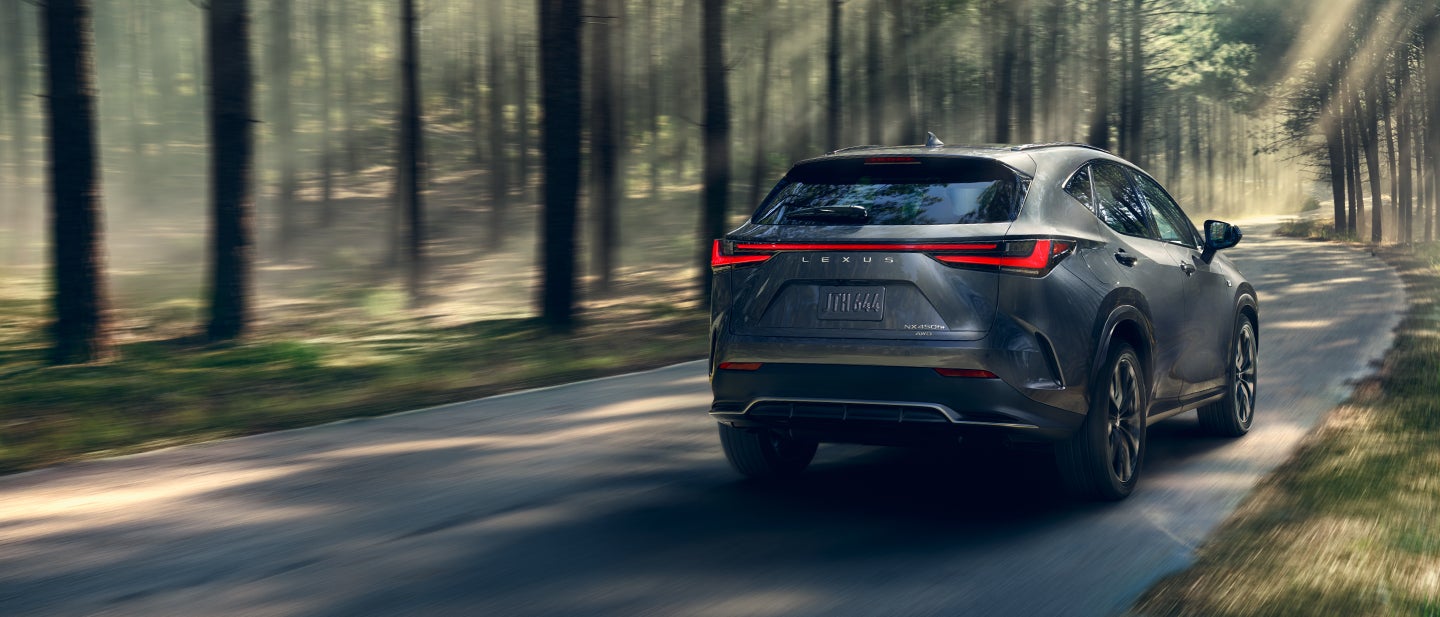
Source: lexus.com | © Lexus, a Division of Toyota Motor Sales, U.S.A., Inc.
Lexus has been in the luxury hybrid business longer than almost anyone. When the first RX 400h arrived in 2005, most premium brands were still treating electrification as a science project. Two decades later, virtually every model in the Lexus lineup runs some form of electrified powertrain — and the engineering behind that is far more sophisticated than people give it credit for.
How Lexus Hybrid Drive Works
Lexus Hybrid Drive is a full hybrid system — it can run on electricity alone, combustion alone, or both simultaneously. The electric motor is powerful enough to move the car from a standstill without the petrol engine, unlike mild hybrids that only assist the combustion unit.
Four operating modes run automatically:
- EV Mode: At low speeds, the petrol engine shuts off. The car runs silently on battery power alone.
- Engine Mode: At highway speeds or low battery, the engine takes over and charges the battery via an integrated generator.
- Combined Mode: Under hard acceleration, both engine and motor fire together for maximum power.
- Regenerative Braking: Lifting off the throttle or pressing the brake reverses the motor into a generator, recapturing kinetic energy back to the battery.
The transmission is an Electronic CVT (E-CVT) built around a planetary gear set — no fixed gears, just continuously optimised ratios. Crucially, these are self-charging hybrids: the NX 350h, RX 350h, ES 300h, and UX 300h never need to be plugged in.
The MULTI-Stage Hybrid System
Standard E-CVT hybrids have one known weakness: engine speed can feel disconnected from road speed under hard acceleration — the "rubber band" sensation common in economy cars. Lexus fixed this with the MULTI-Stage Hybrid System, first seen in the LC 500h coupe.
The fix is a conventional 4-speed automatic transmission bolted behind the standard hybrid transaxle. This mechanical gearbox multiplies the output of both engine and electric motor, giving real gear changes and paddle-shift capability ("M" mode). The same system powers the RX 500h F SPORT Performance — 366 hp, 406 lb-ft of torque, 0–60 mph in 5.9 seconds, yet still 27 mpg combined.
e-AWD: No Prop Shaft Required
Lexus e-AWD skips the conventional centre differential and prop shaft entirely. A dedicated electric motor at the rear axle drives the rear wheels independently, while the front is handled by the combustion engine and front motor. Torque split happens electronically and near-instantaneously — faster than any mechanical clutch pack. Weight penalty versus front-wheel-drive models is minimal because there's no heavy driveshaft to add.
Lexus vs. Standard Toyota Hybrid
Both brands share the same planetary E-CVT architecture, but the differences are real:
- Calibration: Toyota tunes for maximum economy. Lexus tunes for silence, smoothness, and linear throttle response.
- Battery output: Lexus batteries discharge faster, supporting stronger electric-only acceleration from rest.
- MULTI-Stage system: Lexus-exclusive — no Toyota model uses the 4-speed multiplier.
- PHEV transition: When a Lexus PHEV (NX 450h+, RX 450h+) depletes its plug-in battery, it reverts to self-charging hybrid mode — not bare combustion like most competitors.
- Acoustic isolation: Lexus invests heavily in sound deadening around hybrid components. The EV-to-engine transition in an ES 300h is nearly imperceptible; in a RAV4 Hybrid it's noticeably abrupt.
The 2024–2026 Lexus Hybrid Lineup
UX 300h — Entry Point (from $38,850)
A 2.0-litre Atkinson-cycle four-cylinder plus two electric motors produces 196 combined hp. EPA-rated 43 mpg combined. Optional e-AWD via a rear motor. 0–60 mph in ~7.7 seconds. Best for urban buyers who want genuine luxury with minimal running costs.
ES 300h — Efficiency Sedan (from $44,615 in 2025)
A 2.5-litre hybrid four produces 215 combined hp with 44 mpg combined — exceptional in the executive sedan class. The revised 2026 ES 350h upgrades to 244 hp and 46 mpg FWD. Still the clearest case for self-charging luxury in a full-size sedan.
NX 350h / NX 450h+ — Bestselling Hybrid SUV (from $46,570)
The NX 350h delivers 240 hp, 40 mpg combined, and 0–60 in 7.2 seconds. The NX 450h+ plug-in adds electric-only range of 37 miles, jumps to 304 hp, and hits 60 mph in 6.0 seconds — the quickest standard NX ever. Both use e-AWD. The 450h+ rates 84 MPGe on a full charge, starting around $62,450.
RX 350h / RX 450h+ / RX 500h — Three Flavours (from $55,075)
The RX 350h offers 246 hp and 36 mpg in a comfortable midsize package. The RX 450h+ PHEV adds ~38 miles of electric range from $65,230. The RX 500h F SPORT Performance is the standout: turbocharged 2.4-litre + MULTI-Stage Hybrid = 366 hp, 406 lb-ft, 5.9-second 0–60, 27 mpg. Starting at $68,450.
LX 700h — Flagship Off-Roader (from $116,685)
Twin-turbocharged 3.4-litre V6 plus hybrid system: 457 hp and 583 lb-ft of torque. 0–60 mph in ~6.2 seconds. Tows 7,992 lbs. Returns 20 mpg combined — two better than the non-hybrid LX 600. A full-frame body-on-chassis SUV that uses hybrid torque to improve real off-road performance, not just efficiency figures.
Price Summary
- UX 300h: from $38,850
- ES 300h: from $44,615 (2025) | ES 350h from $51,095 (2026)
- NX 350h: from $46,570
- NX 450h+ (PHEV): from ~$62,450
- RX 350h: from $55,075
- RX 450h+ (PHEV): from $65,230
- RX 500h F SPORT Performance: from $68,450
- LX 700h: from $116,685
Why It Still Makes Sense in 2026
Pure battery-electric vehicles dominate the industry conversation, but Lexus hybrids remain compelling where fast charging is unreliable. Self-charging models need zero changes to routine or infrastructure. PHEVs cover most daily commutes on electricity while keeping full combustion backup. The RX 500h and LX 700h prove hybrid hardware can raise performance, not limit it.
With 20-plus years of refinement behind every system, Lexus has built one of the most capable and comprehensive electrified luxury lineups in the world — and the real-world reliability data backs that up.
Sources and editorial note
Specifications, performance data, pricing, and technical claims in this article are based on official manufacturer publications and reputable industry sources linked below. Figures quoted by the manufacturer as test values or internal measurements may differ in real-world use. Pricing varies by market and changes over time.
- https://www.lexus.com/models/NX-hybrid
- https://www.lexus.com/models/RX-hybrid
- https://lexus.com/models/lx-hybrid
- https://newsroom.lexus.eu/the-technology-revolution-four-generations-of-self-charging-hybrid-electric-power
- https://support.lexus.com/s/article/How-does-Lexus-Hybrid-Drive-work
- https://mag.lexus.co.uk/how-does-lexus-hybrid-drive-work
- https://global.toyota/en/newsroom/lexus/34099563.html
- https://www.lexusofmtkisco.com/lexus-rx-500h-f-sport-performance-specs
- https://www.fueleconomy.gov/feg/PowerSearch.do?action=noform&make=Lexus&model=ES%20300h&srchtyp=ymm&year=2025
- https://www.kbb.com/lexus/lx/2025/lx-700h-ultra-luxury
The lead image is an official manufacturer photograph/illustration credited to Lexus, a Division of Toyota Motor Sales, U.S.A., Inc., used under fair editorial reporting with visible attribution. It is reproduced here for identification and commentary purposes only.