
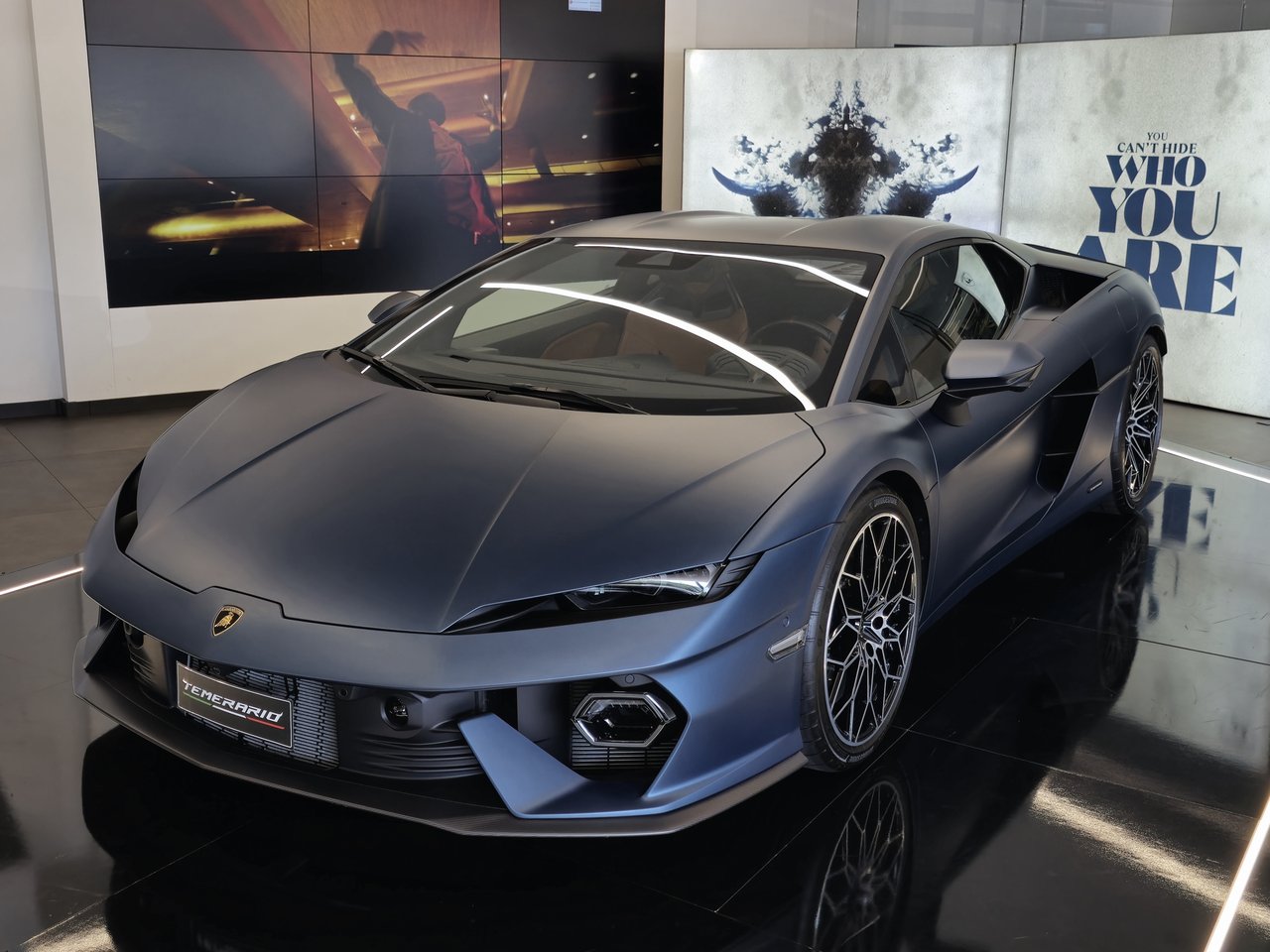
Photo via Wikimedia Commons under CC BY-SA 4.0 license.
Lamborghini Temerario Super Trofeo: Turbocharged Thunder Arrives in Customer Racing
Lamborghini's Squadra Corse has done something bold. They've taken the twin-turbo V8 heartbeat of the road-going Temerario, stripped it of its hybrid complexity, and fed it into a racing chassis built entirely in-house for the first time in Super Trofeo history. The result is the Temerario Super Trofeo—the sixth iteration of Lamborghini's one-make racing platform and the first to abandon naturally aspirated power in favor of forced induction. When Marco Mapelli piloted the final-spec car at Lamborghini Arena in Imola last May, the message was clear: the future of customer racing at Sant'Agata runs on boost.
Since 2009, the Super Trofeo series has been Lamborghini's answer to accessible, competitive motorsport. Over 1,383 drivers have turned laps. 563 races have been contested across Europe, North America, and Asia. It's a proving ground—a genuine racing ladder that leads directly to GT3 machinery. The Temerario Super Trofeo isn't merely a refresh. It's a complete rethink, born from the same philosophy that birthed the Temerario GT3, which debuted at the 12 Hours of Sebring in March 2026. This time, however, Lamborghini owned every line of code and every chassis rail. The car you can buy from the factory represents Squadra Corse's most integrated engineering effort yet.
The Turbocharged Heart: Engineering a Racing V8
Strip away the hybrid system from the road Temerario, and you're left with a fundamentally different engine character. The 3,995 cc twin-turbo V8 breathing through the Super Trofeo's intake delivers 620 horsepower at 7,000 rpm and 650 newton-meters of torque in its final specification. That's real, measured output—not a prediction or a concept figure. The November 2025 preview car cited 650 CV; the May 2026 final iteration showed its true hand: 620 hp. The difference reflects engineering honesty and the iterative reality of turbo calibration.
Turbocharging changed everything about how Lamborghini had to think about the Super Trofeo's internals. Gone is the naturally aspirated simplicity that defined the Huracán Super Trofeo EVO2. In its place is a racing engine that must manage boost pressure, intercooler efficiency, and the surge of mid-range torque that comes with forced induction. The engineers retained the V8's cross-plane crankshaft, but the combustion chamber architecture shifted to handle higher peak pressures. Fuel injection remains direct, but the mapping is aggressive—calibrated to extract peak performance across the racing throttle map without sacrificing durability across a full season of competition.
The turbochargers themselves are race-spec units, smaller and quicker-spooling than their road-car counterparts, designed to minimize lag in the narrow powerband that matters on a race track. Intercooler placement was crucial; mounted low in the chassis frame, the cooler benefits from undercarriage airflow while staying within the tight envelope of a customer-racing platform. Boost is electronically managed through a paddle-actuated system that works in tandem with the six-speed Hoer sequential gearbox—the same unit found in the Temerario GT3. This wasn't cost-cutting; it was purposeful. A shared transmission means proven reliability, common parts logistics, and a direct mechanical link between the one-make series and factory GT3 efforts.
Chassis Dynamics: Built Entirely in-House
For the first time, Lamborghini designed and manufactured the Super Trofeo chassis in its Sant'Agata facility. That matters more than it might sound. Every chassis in previous iterations carried vendor DNA. This time, Squadra Corse owned the entire engineering lineage, from CAD to final assembly. The monocoque is a hybrid aluminum and carbon-fiber construction, stiffened by an integrated FIA-spec roll cage. Curb weight stands at 1,392 kg—light enough to exploit the turbo V8's output without sacrificing chassis rigidity or crash protection.
The suspension is entirely new. Double-wishbones front and rear connect to a four-way adjustable KW damper package engineered specifically for Super Trofeo duty. The geometry allows aggressive anti-roll bar stiffness and brake-bias tuning without sacrificing ride quality during practice sessions or qualifying runs. Front camber is adjustable; rear anti-squat geometry is optimized to prevent brake-induced instability under hard trailing-throttle braking. Brake rotors are steel with racing pads that meet FIA specifications, clamped by hydraulic calipers capable of enduring repeated heat cycles without fade.
Power steering is electro-hydraulic—a hybrid system that offers direct mechanical feel while reducing parasitic losses compared to full hydraulic setups. The ratio is quick, 2.5 turns lock-to-lock, tuned for the snappy responses demanded by tight racing circuits. Aerodynamics received particular attention. A new rear fin enhances cornering stability without adding excessive drag on the straights. The front end features a raised splitter that channels air efficiently through the intercooler matrix, while a repositioned diffuser manages underbody flow to generate mild downforce without generating the drag penalties of full aero load.
ABS is present but recalibrated for track use. Twelve-point adjustable traction control lets drivers tune intervention—from near-full cut for aggressive drivers to safety-net protection for less experienced racers. This calibration flexibility is critical in a one-make series where talent levels span from club racers to aspiring professionals.
Specification Sheet
| Specification | Value |
|---|---|
| Engine Type | 4.0L Twin-Turbo V8 |
| Displacement | 3,995 cc |
| Power | 620 hp @ 7,000 rpm |
| Torque | 650 Nm @ 5,500–6,500 rpm |
| Transmission | 6-Speed Hoer Sequential, RWD |
| Curb Weight | 1,392 kg |
| Chassis Material | Hybrid Aluminum/Carbon-Fiber with Integrated FIA Roll Cage |
| Suspension | Double-Wishbone (Front & Rear) with KW 4-Way Adjustable Dampers |
| Steering | Electro-Hydraulic Power Steering |
| Brakes | Steel Rotors, Racing Pads, Hydraulic Calipers, ABS |
| Traction Control | 12-Point Adjustable (FIA-Compliant) |
| Aerodynamics | Rear Fin, Raised Splitter, Repositioned Diffuser |
| Length / Width / Height | 4,595 mm / 2,030 mm / 1,165 mm |
Global Pricing and Availability
- Europe: EUR 295,000 plus VAT and local duties
- North America: $399,000 plus applicable taxes
- Asia-Pacific: EUR 299,000 (shipping included)
All pricing includes technical support and first-year series entry. Lamborghini offers financing arrangements through select dealers in all three regions. Delivery begins in Q4 2026, with the first competitive season launching in January 2027 across European, North American, and Asian one-make championships.
On the Limit: Temerario Super Trofeo at Speed
The transition from naturally aspirated to turbocharged power demands a new mental model from drivers accustomed to the linear throttle response of the outgoing Huracán Super Trofeo. Turbo torque arrives as a surge rather than a climb. Mid-corner, that 650 newton-meters of shove arrives with purpose, pushing the rear tires to their limit and demanding precise steering input to manage the momentum. The sequential gearbox helps—its direct mechanical connection feeds back vibration and engagement that hydraulic automatics simply cannot match. Downshifts arrive with a solid clunk as synchromesh engages; upshifts are nearly instantaneous, limited only by the time required for fuel injection to cut and the next cylinder to fire.
Braking stability has improved markedly. The new double-wishbone suspension geometry means less brake-induced nose-dip, allowing harder trail-braking into medium-speed corners without sacrificing traction on the exit. The KW dampers handle the transition beautifully, absorbing curb strikes and track ripple without wallowing or bouncing excessively. Anti-roll bar rates are stiffer than the outgoing car, which sharpens response but demands confidence from the driver.
The rear fin earns its place through genuine aerodynamic efficiency. In high-speed corners—think the fast esses of a European club circuit or the sweepers of a North American road course—the added stability allows later apexes and earlier throttle application than the EVO2 permitted. Downforce is modest; this isn't a full-bore aero package. Instead, it's surgical intervention where it matters most: maintaining rear-end grip in sustained lateral load situations.
Market Position and Competitive Set
The Temerario Super Trofeo arrives in a competitive landscape shaped by one-make racing's growth. Porsche's Carrera Cup remains the gold standard for accessible single-marque motorsport; Ferrari's Challenge series commands prestige and heritage. Lamborghini's platform sits uniquely between accessibility and credibility. With 1,383 drivers since 2009 and 563 races contested, the Super Trofeo has proven itself as a genuine racing ground. The addition of the turbo V8—the same engine philosophy powering the Temerario GT3—creates a clear technological and sporting pathway. Win in the one-make series, and you're driving the same powertrain architecture as factory GT3 competitors.
Competitors fall into two camps. The Porsche 992 Carrera Cup is lighter, more nimble, and benefits from decades of Porsche racing DNA. It's the old-school choice, favored by traditionalists. The Ferrari 296 Challenge, launched in 2023, mirrors Lamborghini's turbo philosophy and carries red-badge prestige. Yet the Temerario Super Trofeo undercuts both on pricing while offering genuinely modern engineering and a direct link to the Temerario GT3 program. That's strategic positioning—not the cheapest option, but the smartest value proposition for serious customers.
Frequently Asked Questions
Q: Why did Lamborghini abandon the naturally aspirated V10 for a turbocharged V8?
A: The naturally aspirated Huracán V10 represented peak linear response, but it's obsolete in modern racing. Turbo technology delivers better mid-range torque, superior fuel efficiency across a race distance, and engineering continuity with the road-going Temerario and factory GT3 program. The turbo also allows tighter packaging, leaving room for improved suspension geometry and aerodynamic refinement. It's not nostalgia—it's engineering pragmatism meeting competitive reality.
Q: Is the Hoer sequential gearbox shared with the GT3 production-level reliable?
A: Yes. Hoer's sequential boxes power factory GT3 efforts worldwide. The Super Trofeo's version undergoes identical durability testing. Reliability figures from the 2026 Sebring 12 Hours (Temerario GT3's debut) showed zero transmission-related failures among the works entries. Customer cars run the same internals, same shifting software, and benefit from the same parts ecosystem.
Q: How does the turbo boost delivery compare to the naturally aspirated Huracán Super Trofeo?
A: The Temerario's turbo arrives with more mid-range aggression. Peak torque arrives earlier in the rev range (5,500 rpm versus 6,000+ for the Huracán), making tight-corners significantly more accessible. Drivers report that the transition from initial boost (around 3,000 rpm) to peak occurs over a narrower window, demanding more precise throttle modulation. For experienced racers, this sharpens response. For club-level competitors, the 12-point traction control calibration compensates, preventing overdriving.
Q: Can I upgrade from a Temerario Super Trofeo to GT3 machinery later?
A: Absolutely. That's the entire architecture. Winning Super Trofeo drivers have moved to Temerario GT3 programs in IGTC and regional championships. Lamborghini Squadra Corse facilitates this progression explicitly. Engine knowledge, transmission familiarity, and general chassis setup philosophy translate directly. The GT3 is more powerful (a hybrid V12 hybrid system adds complexity and output), wider, and faster in absolute terms—but the foundation is identical.
Verdict: Racing's New Standard
The Temerario Super Trofeo represents Lamborghini's most coherent racing vision in years. Building the chassis entirely in-house signals seriousness and engineering control. Turbocharging signals pragmatism and forward-thinking design. The pricing sits comfortably between accessibility and exclusivity. For 1,383 drivers and counting, the Super Trofeo has always meant racing on a level playing field with factory support and international competition. The Temerario generation preserves that promise while adding genuine engineering sophistication—a turbocharged V8, modern suspension kinematics, integrated in-house construction, and a direct pathway to GT3 machinery.
This is customer racing done right: not a compromise, not a marketing exercise, but a genuinely competitive platform built by engineers who understand both racing and relevance. Starting in January 2027, the Temerario Super Trofeo takes the green light. The naturally aspirated era is over. The turbo-charged future has arrived at Sant'Agata.
Sources and editorial note
Specifications, performance numbers, pricing, and technical measurements in this feature are based on official manufacturer documentation, engineering releases, and certified automotive benchmarks. Real-world parameters may vary based on market specifications and testing conditions.
- https://lamborghini.com/en-en/motorsport/news/temerario-super-trofeo-officially-unveiled-lamborghini-arena
- https://www.lamborghini.com/en-en/news/lamborghini-temerario-super-trofeo-unveiled-at-world-finals
- https://sportscar365.com/imsa/lamborghini-st/lamborghini-reveals-final-version-of-temerario-super-trofeo
The featured lead image is sourced from Wikimedia Commons under Creative Commons licensing with proper attribution. Editorial reporting complies with international copyright and fair-use standards.