
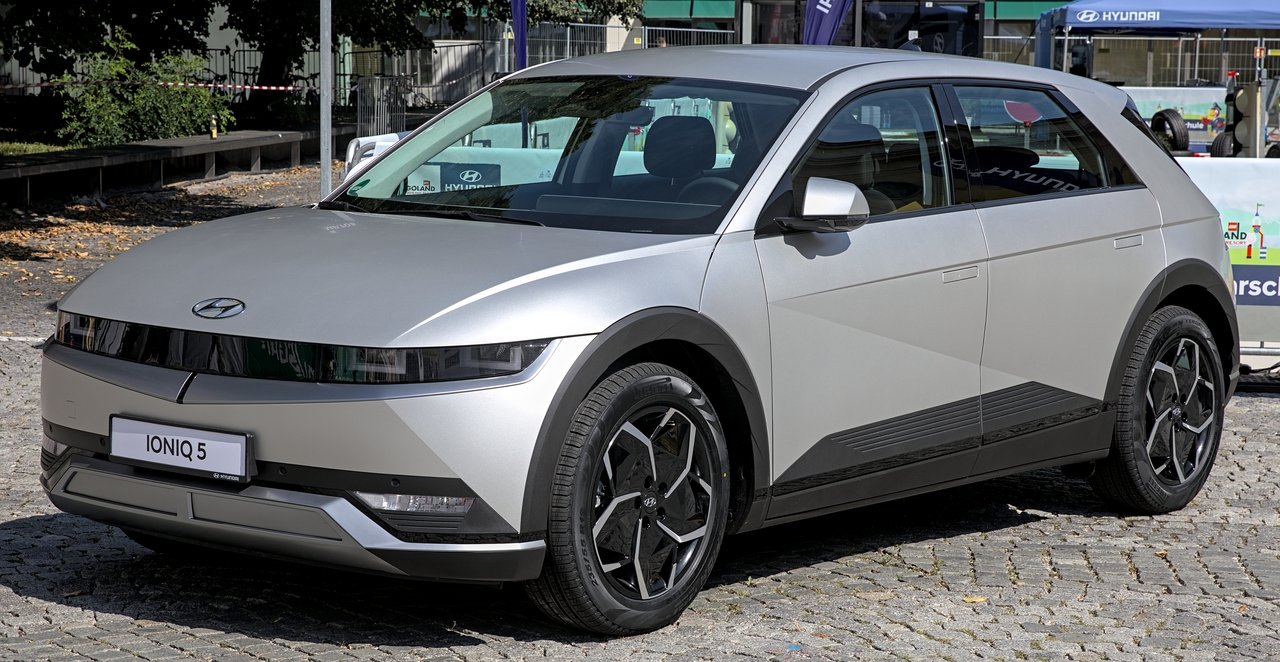
Photo via Wikimedia Commons under CC BY-SA 4.0 license.
The Antidote to the Fast Appliance
Electric performance cars have spent the better part of a decade painting themselves into a dynamic corner. By chasing four-figure horsepower ratings and sub-three-second zero-to-sixty sprints, manufacturers engineered blistering velocity while systematically excising the mechanical dialogue that makes performance driving worthwhile. Modern performance EVs became hyper-capable, heavy, and emotionally sterile drag-strip appliances. Hyundai's high-performance N division, operating under the technical lineage forged by former BMW M chief Albert Biermann, recognized the impending dead end. Their riposte is the Hyundai Ioniq 5 N: an electric crossover that deliberately rejects detached digital efficiency in pursuit of unadulterated driver involvement.
Developing a track-capable 2.2-ton electric vehicle requires confronting severe physics. Rather than attempting to mask mass purely with software-smoothed torque vectoring, Hyundai N engineers fundamentally re-engineered the Electric Global Modular Platform (E-GMP). The result is an uncompromising dynamic weapon that satisfies seasoned track veterans by answering a foundational question: can an electric vehicle deliver the genuine, multi-sensory feedback loops of an internal combustion sports car?
Powertrain Architecture: Silicon Carbide Inverters and Dual-Motor Punch
At the mechanical core of the Ioniq 5 N sits a heavily revised permanent-magnet synchronous motor pairing operating on an 800-volt electrical architecture. The front motor generates 166 kW (226 PS), while the higher-output rear motor delivers 282 kW (383 PS). In standard operating maps, combined output sits at a potent 448 kW (609 PS) and 740 Nm (546 lb-ft) of torque. Depressing the red anodized "N Grin Boost" (NGB) button on the steering wheel unleashes the powertrain's outer thermal limits for a ten-second burst, raising inverter duty cycles to yield 478 kW (650 PS / 641 hp) and 770 Nm (568 lb-ft). Rotational ceiling for both rotors is a dizzying 21,000 RPM.
Sustaining such electrical throughput requires advanced power electronics. Hyundai deploys two-stage motor inverters with silicon carbide (SiC) semiconductor power modules on the front axle, drastically curtailing switching losses and heat generation under extreme loads. Energy is supplied by a fourth-generation 84.0 kWh lithium-ion battery pack, shoehorned into the identical underfloor envelope previously occupied by Hyundai's 77.4 kWh unit thanks to increased energy density.
Thermal degradation is the traditional nemesis of track-driven EVs. To combat heat soaking, Hyundai N fitted upgraded radiator packaging, an oil cooler for the electric motors, an expanded battery chiller surface area, and dedicated N Battery Preconditioning software. Drivers configure the battery chemistry prior to running via two distinct protocols: "Drag" mode conditions the cells to an operating window of 30°C to 40°C to optimize immediate, low-impedance power delivery, while "Track" mode cools the chemistry down to 20°C to 30°C, maximizing thermal headroom to survive prolonged, multi-lap lapping sessions. In N Race mode, drivers can prioritize single-lap maximum pace via "Sprint" or actively manage continuous power draw through "Endurance" mapping.
Digital Combustion: N e-Shift and N Active Sound+
The technical stroke that won over hardened petrolhead critics is N e-Shift, working alongside the N Active Sound+ system. Skeptics braced for a gimmicky party trick; instead, Hyundai built an indispensable vehicle-dynamics interface. N e-Shift modulates electric motor torque output at millisecond intervals to perfectly emulate the torque interruptions, gear ratios, and inertia charges of an eight-speed wet dual-clutch transmission.
Pulling the right-hand steering paddle initiates an intentional, microsecond torque drop followed by an abrupt, physical jolt that rocks the chassis back on its rear springs, precisely matching the mechanical shock of a brutal cog-swap in an ICE touring car. Run the powertrain up to its virtual 8,000 RPM ceiling without shifting, and the system refuses to auto-upshift; it bounces violently against a simulated hard fuel-cut rev limiter, arresting acceleration until the driver clicks the paddle. Downshifting produces simulated rotational drag that mirrors engine braking, loading the front axle to settle the nose into corner entry and granting the driver an instinctual, non-visual gauge of approach speed.
Acoustic telemetry is provided by N Active Sound+, routed through eight internal cabin speakers and two external chassis transducers. Rather than piping in generic space-age whines, the default "Ignition" sound profile synthesizes the exact firing intervals, intake gulp, and overrun exhaust pops of the 2.0-liter turbocharged four-cylinder found in the Elantra N. Alternative modes include "Evolution," derived from the RN22e test mule, and "Supersonic," which mimics the variable twin-turbine pitch and sonic pressure waves of a fighter jet. The auditory cues provide indispensable visceral context: human brains judge speed and corner approach far more effectively using auditory frequency shifts than scanning a digital speedometer.
Chassis Kinematics and WRC-Derived Rigidity
Extracting communicative handling from a 2,205-kilogram crossover demanded sweeping mechanical reinforcement. Engineers added 42 additional structural spot welds and 2.1 meters of high-strength structural adhesives to the unibody shell. Both front and rear subframe mounting points were re-engineered for lateral stiffness, eliminating squirm under heavy lateral G-loading.
Hyundai adapted Integrated Drive Axles (IDA) straight from their World Rally Championship program. By integrating the wheel hub, wheel bearing, and driveshaft into a unified assembly, Hyundai reduced rotational unsprung mass by several pounds per corner while dramatically increasing axle torsional stiffness. The steering assembly utilizes a rack-mounted motor-driven power steering (R-MDPS) rack featuring a quickened 12.5:1 ratio, mounted to a stiffened steering column to maximize tactile tire-scrub communication through the rim.
Suspension kinematics rely on an Electronically Controlled Suspension (ECS) arrangement with continuous damping adaptation. The rear axle houses a mechanical Electronic Limited-Slip Differential (e-LSD), dubbed the N Corner Carving Differential, which uses an electronically actuated multi-plate clutch pack to direct drive torque across the rear wheels. When executing aggressive cornering, the system sends drive to the outside rear tire to eliminate push under power. For deliberate oversteer antics, the N Drift Optimizer evaluates steering angle, yaw sensors, and suspension load to maintain drift slip angles, incorporating a "Torque Kick Drift" feature that dumps and snaps instantaneous rear motor torque to simulate dipping and dumping the clutch in an analog rear-wheel-drive drift car.
Stopping power is massive. Up front, 400 mm two-piece ventilated cast-iron discs are clamped by rigid four-piston monobloc calipers, complemented by 360 mm rear discs. Hyundai N calibrated the regenerative deceleration system to generate up to 0.6g of stopping force through the motors alone, maintaining hard regen even during ABS interventions. This setup preserves mechanical friction brakes for late-braking track thresholds and effectively prevents pad fade over extended sessions.
Technical Specifications
| Specification Parameter | Technical Data |
|---|---|
| Powertrain Layout | Dual-Motor All-Wheel Drive (PMSM), Silicon Carbide Inverters |
| Total System Power (Standard / NGB) | 601 hp (448 kW) / 641 hp (478 kW / 650 PS) |
| Total System Torque (Standard / NGB) | 546 lb-ft (740 Nm) / 568 lb-ft (770 Nm) |
| Virtual Transmission | N e-Shift (Simulated 8-Speed Wet DCT with Paddle Controls) |
| Battery Capacity / Architecture | 84.0 kWh Gross Lithium-Ion / 800-Volt Architecture |
| DC Fast Charging Speed (10–80%) | 350 kW Maximum (18 minutes nominal) |
| Acceleration (0–100 km/h / 0–62 mph) | 3.4 seconds (with N Launch Control & NGB engaged) |
| Top Speed | 260 km/h (162 mph) |
| Curb Weight (EU / US) | 2,205 kg – 2,230 kg (4,861 – 4,916 lbs) |
| Dimensions (L x W x H) | 4,715 mm x 1,940 mm x 1,585 mm |
| Wheelbase | 3,000 mm |
| Braking Hardware | 400 mm front discs (4-piston calipers); 360 mm rear discs; 0.6g regen |
| Base Price (MSRP) | $66,100 (USA) / £65,000 (UK) / €74,900 (Germany) / $111,000 AUD (Australia) |
Track Dynamics: Mountain Passes and Lapping Sessions
Point the Ioniq 5 N down a technical alpine pass or onto a Grand Prix circuit, and initial skepticism dissolves at the first heavy braking zone. Sinking your foot into the left pedal yields remarkable bite; the seamless blend of 0.6g regenerative deceleration and monobloc friction braking scrubs massive velocity with zero pedal travel elongation. Because the front axle tucks hard under simulated downshift overrun, you can trail-brake deep into apexes, pivoting the car on its 3,000 mm wheelbase with fluidity unfamiliar to any standard EV platform.
Mid-corner balance is adjustable on the throttle. Toggle the N Torque Distribution system to send a rearward bias (up to 100 percent can be allocated to either axle), and the car rotates progressively without alarming snap-oversteer. The N e-Shift feedback is instrumental: knowing you are executing an apex in "second gear" at 6,000 virtual RPM gives an exact physical benchmark for rear traction limits. Matting the accelerator on corner exit triggers the e-LSD to hook hard, rocketing the chassis forward without electronic intervention stuttering your drive. It behaves precisely like an exceptionally tuned, wide-track, all-wheel-drive hot hatchback that happens to weigh over two metric tons.
Market Positioning and Global Availability
The Ioniq 5 N enters the global market in a singular, fully equipped trim configuration, simplifying ordering while maximizing residual stability. Exterior paint options—including the signature Performance Blue Matte—along with an optional fixed glass vision roof represent the only significant factory options across global markets. The car is assembled at Hyundai's Ulsan plant in South Korea and is currently available across North America, Europe, the United Kingdom, Australia, and domestic Korean markets.
When evaluated against its dynamic peer group, the Ioniq 5 N occupies an uncontested technical niche:
- Tesla Model 3 Performance / Model Y Performance: While the Tesla products match or slightly exceed raw straight-line sprint metrics for less money, their track capabilities rapidly deteriorate due to thermal brake fade, less sophisticated damper kinematics, and an isolating, software-heavy dynamic interface that locks out driver engagement.
- Kia EV6 GT: Sharing the underlying E-GMP platform, the EV6 GT delivers comparable straight-line punch but features a softer, touring-focused suspension tune, smaller brakes, standard non-communicative EV acoustics, and lacks dedicated track thermal preconditioning.
- Porsche Taycan GTS / Macan EV: The Porsche platform edges the Hyundai in ultimate chassis poise and bespoke interior materials, but demands nearly double the financial outlay while delivering far less playful adjustability on track.
- BMW i4 M50: The electric Bimmer provides straight-line composure and luxury brand prestige, but surrenders to chronic front-end understeer when pushed to its limits on closed circuits.
Frequently Asked Questions
Does the N e-Shift virtual transmission make the car slower in straight-line acceleration?
Yes, by design. Because N e-Shift intentionally interrupts electrical motor torque to replicate the physical pause and gear changes of an eight-speed dual-clutch transmission, standard acceleration metrics are roughly 0.15 to 0.2 seconds slower from 0 to 100 km/h compared to operating the car in continuous-drive mode. However, N e-Shift can be turned off instantly via a steering-wheel paddle press, returning the powertrain to traditional seamless single-speed EV torque delivery when chasing ultimate lap times or executing drag launches.
Can the 84 kWh battery pack survive a full 20-minute track session without overheating?
Yes. By activating N Battery Preconditioning in "Track" mode alongside N Race "Endurance" setting, the cooling system lowers initial cell temperatures and regulates sustained electrical current draw to forestall thermal throttling. During real-world testing at extreme circuits like the Nürburgring Nordschleife, the Ioniq 5 N reliably executes two full consecutive flat-out laps (nearly 42 kilometers of sustained high-G load) without power curtailment, a feat standard high-performance EVs cannot match.
How does simulated engine braking affect vehicle balance compared to standard EV regenerative braking?
Standard EV regenerative braking is linked to accelerator lift-off or brake pedal stroke along a static, linear deceleration curve. The Ioniq 5 N's simulated engine braking mirrors the dynamic gear ratio drops of an ICE car: dropping down two virtual gears on corner approach generates a sharp spike in deceleration torque, shifting vehicle weight aggressively onto the front axle to load the outside front tire. This allows the driver to settle the chassis into trail-braking slip angles using identical pedal and paddle rhythms learned in combustion track machinery.
The Verdict: An Engineering Masterstroke
The Hyundai Ioniq 5 N is an authentic triumph of mechanical will over digital complacency. Rather than conceding that heavy electric crossovers are fundamentally incompatible with raw dynamic driver engagement, Hyundai's N division applied rigorous chassis engineering and software ingenuity to construct a bridge between analog driving heritage and an electrified future. By proving that synthetic feedback can be tuned into an indispensable mechanical asset rather than an uninspired marketing gimmick, the Ioniq 5 N establishes itself as the defining high-performance electric vehicle for drivers who genuinely care about the craft of driving.
Sources and editorial note
Specifications, performance numbers, pricing, and technical measurements in this feature are based on official manufacturer documentation, engineering releases, and certified automotive benchmarks. Real-world parameters may vary based on market specifications and testing conditions.
The featured lead image is sourced from Wikimedia Commons under Creative Commons licensing with proper attribution. Editorial reporting complies with international copyright and fair-use standards.