
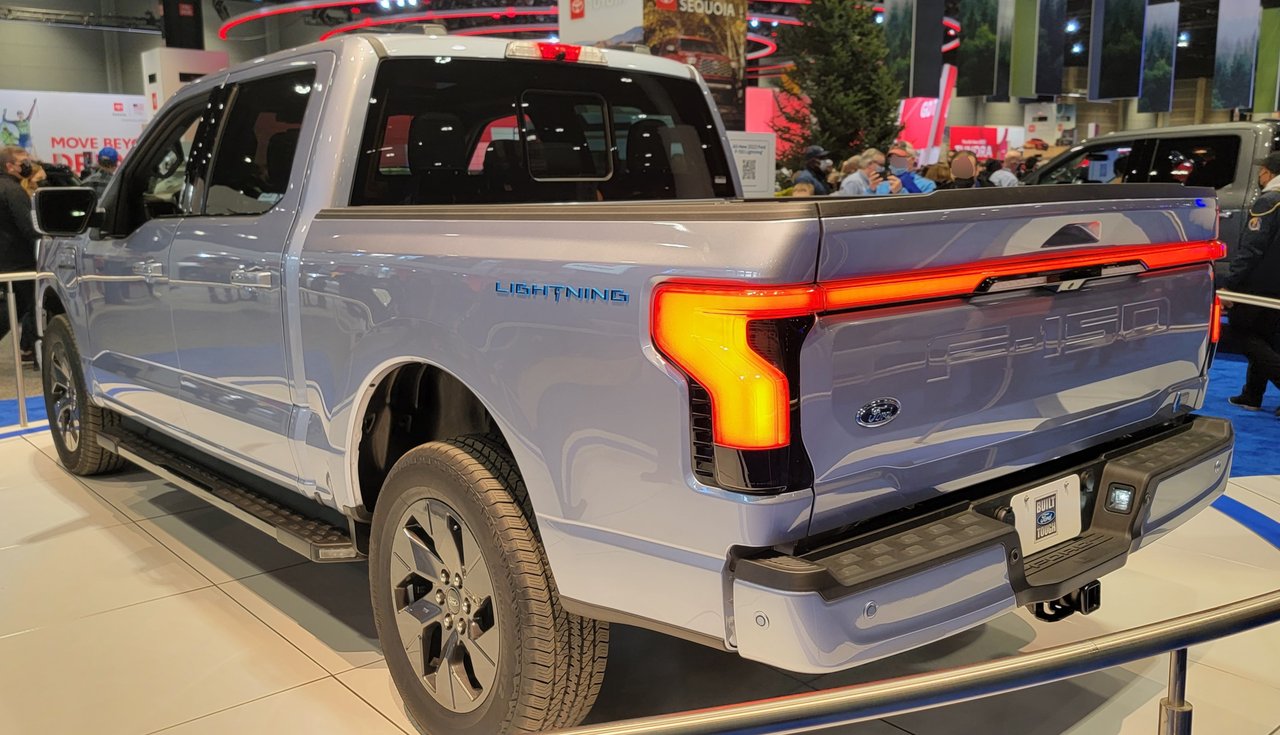
Photo via Wikimedia Commons under CC BY-SA 4.0 license.
Farewell to the Wall-Plug Workhorse: Ford's F-150 Lightning Goes EREV
When the F-150 Lightning launched in 2022, it was supposed to be the truck that converted America. A full-size pickup with a frunk big enough to grill in, instant torque on tap, and enough onboard electrons to power a job site for three days — it felt like the future, dressed in blue-collar clothes. Fast-forward to December 2025, and Ford has quietly pulled the plug. Literally. The battery-electric Lightning is dead, the Dearborn line that built it goes quiet, and in its place comes something far more interesting to this old engineer's eye: an extended-range electric vehicle wearing one of the most storied nameplates in automotive history.
Ford's promise is bold — more than 700 miles of total range, strong electric torque, genuine towing capability — all wrapped around a gasoline engine that never touches the wheels. It's a philosophical U-turn, and honestly, it might be the most pragmatic engineering decision Ford has made this decade.
What Exactly Is an EREV? The Mechanics, Explained
Let's clear up the confusion first, because the marketing departments of the world have muddied these waters badly. An EREV — extended-range electric vehicle — is fundamentally an electric vehicle. The F-150 Lightning EREV will drive its wheels exclusively through electric motors. The gasoline engine has one job and one job only: spin a generator to produce electricity. There is no mechanical connection between engine and axle. No multi-plate clutches, no planetary gearsets blending torque sources, no redundant drive paths.
This is the crucial distinction from a conventional plug-in hybrid. A PHEV like the RAV4 Prime or Ford's own Escape PHEV runs a full transmission and driveline connected to both the engine and electric machines. The engine propels the car directly, usually via a power-split device. In an EREV, the engine is a captive power station — typically run at its most efficient, steady-state rpm to charge the battery or feed the motors directly. Engineers call the sweet spot "the efficiency island," and an EREV lives there permanently.
The packaging implications are significant. Because the engine never needs to rev-match, downshift, or deliver peak power to the wheels, Ford can specify a modest, naturally aspirated unit tuned for thermal efficiency rather than output. Expect something derived from the 2.0-liter EcoBoost family or the 5.0-liter Coyote V8 — Ford hasn't confirmed — sized purely as a generator. The battery, meanwhile, can be smaller than the 131 kWh pack in the outgoing Lightning, because the range equation no longer depends entirely on stored electrons. That saves weight, saves cost, and — critically for a truck — preserves payload and towing figures.
Why Ford Pivoted: The Cold, Hard Sales Data
The writing has been on the wall for a while. Ford reported EV segment losses running into billions annually, and Lightning sales consistently trailed the hybrid F-150, which itself became the volume leader among electrified pickups. Electric trucks turned out to be a harder sell than anyone in Dearborn's planning department predicted: towing an 8,000-pound trailer at highway speed can cut an EV truck's range by 40 to 50 percent, and charging infrastructure in rural America remains patchy at best.
The EREV sidesteps both objections. The 700-mile total range figure means a Lightning owner can tow a horse trailer from Dallas to Denver without plotting charge stops like a military operation. The electric motors still deliver full torque from zero rpm — the characteristic that made the original Lightning such a startling drag-racer — while the generator erases range anxiety entirely. It's the engineering equivalent of having your cake and eating it, and the laws of physics only ask for one compromise: you're lugging a gasoline engine and fuel tank around that the wheels never use. Call it a 200-plus pound insurance policy against being stranded.
Powertrain and Chassis: What We Know
Ford has been tight-lipped on the specifics, but the architecture is likely to echo what Ford tested in the F-150 Lightning Switchgear concept — a dual-motor setup with serious output. The outgoing Lightning produced between 452 and 580 horsepower and up to 775 lb-ft of torque, and there's no reason to expect the EREV to be slower; electric motors don't care where their electricity comes from. With a continuously feeding generator, sustained towing output — the scenario that saps pure EVs — actually becomes an EREV strength, because the engine can supply power indefinitely at generator-limited rates.
The chassis should carry over the Lightning's fully independent rear suspension — a rarity in the pickup segment and a genuine contributor to its composed ride quality. Expect the EREV to retain the outgoing truck's steering rack, though recalibrated, along with the multi-link rear end and the massive inboard braking hardware that regenerative recuperation demands. With a smaller battery mounted in the frame rails, the center of gravity may actually drop slightly compared to the BEV, which should sharpen turn-in on the twisty stuff. Don't expect miracles — this is a 6,000-pound truck — but the Lightning was always the most car-like F-150 in the corners, and that character should survive.
Specifications (Projected)
| Specification | F-150 Lightning EREV (Projected) |
|---|---|
| Powertrain | Dual electric motors + gasoline generator (EREV) |
| Engine Role | Generator only — no mechanical drive to wheels |
| Total Output | Expected 500–580 hp (TBD) |
| Torque | Expected 700–775 lb-ft (TBD) |
| Battery Capacity | TBD (expected 70–90 kWh usable) |
| Total Range | 700+ miles (Ford confirmed) |
| 0–60 mph | ~4.0–4.5 seconds (est.) |
| Max Towing | Expected 10,000+ lbs |
| Curb Weight | ~6,000–6,300 lbs (est.) |
| Wheelbase | 145.5 in (expected carryover) |
| Length / Width | ~232 in / ~80 in |
| Assembly | Dearborn, Michigan |
| Price | TBD — expected $60,000–$75,000 range |
Market Position: The New Truck Powerplay
Ford isn't alone in this lane. Ram stunned the segment with its Ramcharger EREV, pairing twin electric motors with a 3.6-liter Pentastar V6 generator for a claimed 690 miles of range, and Chevrolet has confirmed an EREV Silverado for 2027. The full-size truck market, it turns out, has collectively decided that range extenders are the electrification answer — not pure BEV. That's a remarkable industry consensus, and it validates Ford's pivot even as it stings the early adopters who bought the original Lightning.
Pricing will be the make-or-break variable. The outgoing Lightning started around $55,000 and could crest $90,000 in Platinum trim. With a smaller battery offsetting the cost of the engine and generator, Ford has a genuine shot at hitting the $60,000 mark — squarely in F-150 XLT/Lariat territory, where the hybrid currently rules. Global availability will likely remain North America-centric initially; the EREV architecture is far less compelling in European and Asian markets dominated by smaller vehicles and dense charging networks.
Frequently Asked Questions
1. Does the gasoline engine in the Lightning EREV ever drive the wheels?
No. This is the defining trait of an EREV versus a PHEV. The engine operates solely as a generator, converting fuel into electricity that either powers the motors directly or recharges the battery. There's no mechanical driveline between the engine and the axles.
2. How is this different from the F-150 PowerBoost hybrid?
The PowerBoost is a conventional parallel hybrid — its 3.5-liter EcoBoost V6 is mechanically connected to the transmission and propels the truck directly, with electric motors assisting. The Lightning EREV inverts that: electricity is the sole means of propulsion, and the engine is just a very sophisticated onboard generator. The PowerBoost can't drive electric-only at highway speeds with a load; the EREV can.
3. Will towing still murder the range like the electric Lightning?
Far less severely. While towing still increases consumption, the onboard generator continuously replenishes energy, so total range under load degrades far less dramatically than in a pure BEV. The 700-mile combined figure makes long-distance towing genuinely practical rather than an exercise in charge-stop planning.
4. What happens if I run out of gas but still have battery charge?
You keep driving on electrons, exactly like a normal EV. And if the battery runs flat with fuel aboard, the generator keeps the truck moving — the range-extender concept exists precisely so neither failure mode strands you.
MasEko's Verdict
Purists will mourn the death of the battery-electric Lightning, and I understand the grief — the original was a landmark, an honest engineering statement about what EVs could be for working Americans. But engineering is about solving real problems with available tools, and Ford's EREV pivot is exactly that. Electric torque, electric refinement, frunk-to-spare-wheel practicality, plus a gasoline engine that works for the motors instead of the other way around. It's not the future I drew on my university notebooks. It might be better — because it's the one people will actually buy. Dearborn, you have my attention. Again.
Words: MasEko | Maseko Auto (maseko.cloud)
Sources and editorial note
Specifications, performance numbers, pricing, and technical measurements in this feature are based on official manufacturer documentation, engineering releases, and certified automotive benchmarks. Real-world parameters may vary based on market specifications and testing conditions.
- https://www.motortrend.com/news/electric-ford-f-150-lightning-replacement-extended-range-hybrid-erev
- https://www.fromtheroad.ford.com/us/en/articles/2025/next-gen-f-150-lightning-extended-range-electric-vehicle
The featured lead image is sourced from Wikimedia Commons under Creative Commons licensing with proper attribution. Editorial reporting complies with international copyright and fair-use standards.